Iran confirms increase in IAEA nuclear inspections


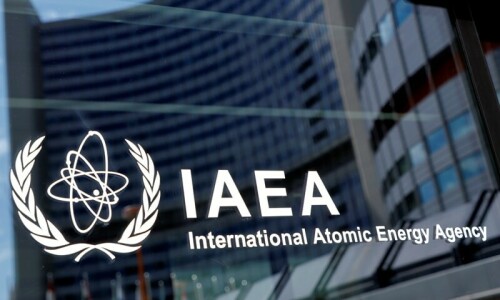
Iran confirmed on Saturday that it has allowed the International Atomic Energy Agency (IAEA) to increase the number of inspections it carries out on Tehran’s nuclear programme, state media reported.
“We have increased capacity — it is natural that the number of inspections should also increase,” the official IRNA news agency quoted the country’s nuclear chief Mohammad Eslami as saying.
“When we carry out nuclear activities, and where we deal with nuclear materials, changing the scale will naturally change the monitoring level,” he added.
Eslami’s comments came after an IAEA report, seen by AFP on Friday, that Iran had agreed to increased monitoring.
“Iran agreed to the agency’s request to increase the frequency and intensity of the implementation of safeguards measures at Fordo enrichment plant” south of Tehran, the IAEA report said.
Last week, the UN nuclear watchdog said Iran had revamped Fordo so it could “significantly increase the rate of production of uranium enriched up to 60 per cent”, close to the 90pc needed to make a nuclear weapon.
Iran insists on its right to nuclear energy for peaceful purposes and denies it is seeking an atomic weapons capability.
“The IAEA has always had access to monitor within the framework of the safeguard agreement and the NPT, and we have not created any obstacles for it and we will not do so,” Eslami said.
The Non-Proliferation Treaty or NPT requires member states to declare and maintain their nuclear materials under IAEA supervision.
Last month, Iran announced it would launch “new and advanced” centrifuges in response to an IAEA board resolution censuring Tehran for what it called a lack of cooperation with the agency.
Britain, France and Germany on Tuesday “condemned” Tehran’s latest steps to expand its nuclear programme, “strongly urging” it to reverse them.
In a letter to the UN Security Council, the three European powers raised the possibility of restoring all UN sanctions against Iran to keep it from developing its nuclear programme.
Nuclear tensions with the West have soared since Donald Trump withdrew from a landmark 2015 deal with Tehran during his first term as US president.
The deal had provided sanctions relief in exchange for limits on Iran’s nuclear programme.