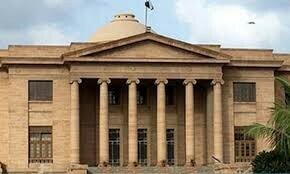
KARACHI: The Sindh High Court (SHC) on Monday ruled that its constitutional benches do not have the same powers and jurisdictions as enjoyed by its parent constitutional high court, or regular benches.
The 38-page detailed judgement came on 14 petitions filed by various industrial and commercial units challenging the competence of legislation to impose a surcharge on electricity under Section 31(8) of the NEPRA Act, 1997.
“As the birth of Article 202A(3) ‘Constitutional Benches’ starts, outside the womb of the High Court, it does not enjoy all the powers, jurisdictions, remedies/reliefs [as] enjoyed by its parent, the Constitutional High Court.
“Instead, the newly created ‘Constitutional Benches’ inherit only the limited and narrow Roster assignment by the Constitution and powers articulated in Article 202A, limiting its legislative assignment to exercising jurisdiction in the High Court under Article 199(1)(a)(i) and Article 199(1)(c) of the 1973 Constitution only,” the court ruled.
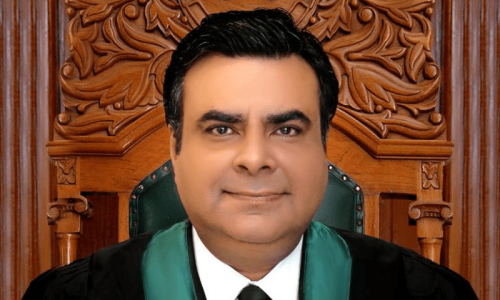
A two-judge bench comprising SHC Chief Justice Muhammad Shafi Siddiqui and Justice Jawad Akbar Sarwana further ruled that in its infinite wisdom, the legislature had not blessed the constitutional benches with entire gambit of constitutional reliefs/remedies, powers, and jurisdiction, but kept the same reserved for the regular benches to grant remedy.
SHC judgement notes new benches can’t issue declaration of illegality or unconstitutionality, have no jurisdiction to issue writ of habeas corpus or quo warranto
“It is a misnomer that the exclusive constitutional jurisdiction of the High Court has now been handed to the so-called “Constitutional Benches” under Article 202A,” the order read.
However, the bench observed, in the case of the Supreme Court the ouster clause under Article 191A was very wide as it took away the entire substantive work/assignment vested in the apex court and transferred it to the constitutional benches of the Supreme Court.
In contrast, the high court’s ouster clause (Article 202A) is ‘narrower’ because the high court benches (judges) — not covered by Article 199(1)(a)(i) and (1)(c) — continue with the otherwise residual constitutional jurisdiction of the high court.
At the outset of hearing, a question arose whether such petitions were to be heard by a regular bench or a constitutional bench.
Lawyers, respondents and an assistant attorney general had no objection to the bench continuing to hear the petitions.
However, the bench noted that their consent still did not confer jurisdiction on it and went ahead to issue the order.
The bench said that after the 26th amendment, apparently the benches/judges of SHC have been split, including the power to grant relief/remedy and to make rules regulating the practice and procedure of the benches.
It observed that two categories of benches may be described, as one was the constitutional high court bench, dealing with all nature of writs of certiorari and habeas corpus as well as all other reliefs, remedies, powers, jurisdictions under the Constitution, while the second was the newly formed constitutional bench under Article 202A having limited powers dealing with restricted subject-matter relief/remedies.
“Constitutional empowerment was not provided to this High Court by virtue of Article 202A; but it is Article 175 that has empowered and continues to empower the entire High Court, including all its benches/judges, to continue to perform their constitutional functions within the framework of the Constitution,” the bench said in its order.
The bench also stated that constitutional benches have no jurisdiction to issue declaration of illegality or unconstitutionality and also have no jurisdiction to issue writ of habeas corpus or a writ of quo warranto. All these writs of declaration/certiorari, habeas corpus and quo warranto may involve questions of constitutionality and/or enforcement of fundamental rights, it added.
Published in Dawn, December 3rd, 2024