Cyclone kills 19 in India and Sri Lanka


NEW DELHI/BENGALURU: Cyclone Fengal killed at least 19 people in India and Sri Lanka and caused flooding in Tamil Nadu state and the Puducherry region after crossing India’s southern coast from the Bay of Bengal on Saturday.
Puducherry had been hit by the heaviest 24-hour rainfall in 30 years, India’s weather office said on social media on Sunday.
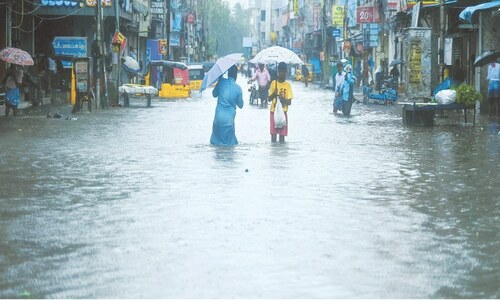
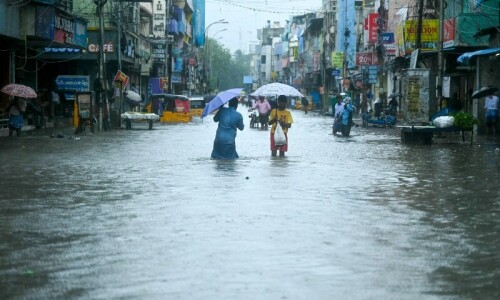
The cyclone left parts of the southern city of Chennai inundated. Flights from the city were temporarily suspended on Saturday, but had resumed as of Sunday morning, India’s airport authority said.
Visuals on local media showed gusty winds and heavy rainfall with roads submerged and boats being used to rescue people.
The Indian army was running relief operations in Puducherry for people in the eye of the storm, while rainfall eased in Chennai.
In Sri Lanka, 16 people were killed, with heavy rains affecting a total of 138,944 families, the latest data from the Disaster Management Centre in Colombo showed.
Cyclone Fengal made landfall late on Saturday with sustained winds of 70-80 kilometres an hour (43-50 miles per hour).
Three people were electrocuted as a result of the storm in Chennai, Tamil Nadu state disaster management minister KKSSR Ramachandran said.
The Times of India reported the death toll was four in India, adding that there was “flooding” and trees falling but “not to the extent feared”.
Cyclones — the equivalent of hurricanes in the North Atlantic or typhoons in the northwestern Pacific — are a regular and deadly menace in the northern Indian Ocean.
While the storm is expected to gradually weaken into a depression later on Sunday, India’s weather bureau warned of heavy rains across parts of India’s south.
It advised a total suspension of fishing operations and also said there was a “moderate to high flash flood risk” in some areas.
Fengal skirted the coast of Sri Lanka earlier this week, killing at least 12 people including six children.
Scientists have warned that storms are becoming more powerful as the world heats up due to climate change driven by burning fossil fuels.
Warmer ocean surfaces release more water vapour, which provides additional energy for storms, strengthening winds.
A warming atmosphere also allows them to hold more water, boosting rainfall. But better forecasting and more effective evacuation planning have dramatically reduced death tolls.
Published in Dawn, December 2nd, 2024