• Ahsan Iqbal calls for expanding trade, more market access, joint ventures in IT, agriculture, manufacturing
• Minister stresses need to collaborate on renewable energy, modernisation of agriculture and infrastructure
• ‘Support’ for Imran Khan from US legislators, calls for probe into ‘poll irregularities’ have strained ties over recent months
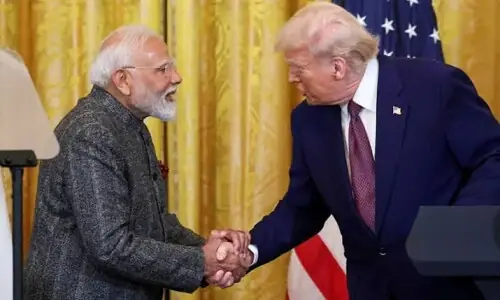
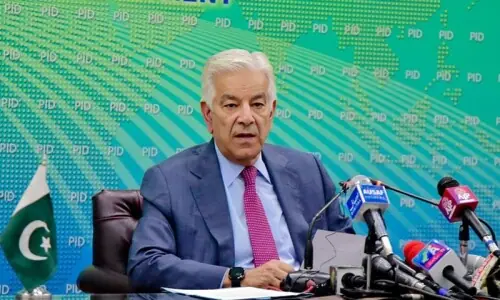
ISLAMABAD: Seeing US President-elect Donald Trump’s second stint as a ‘unique opportunity’ for Pakistan to revitalise its relationship with Washington, Planning Minister Ahsan Iqbal stressed the need for mutual respect and constructive engagement with the US.
Speaking at a USAID event on Monday, the minister called for expanding bilateral trade, enhanced market access and joint ventures in key sectors such as IT, agriculture, and manufacturing.
“With the new US administration taking the helm, we have a unique opportunity to revitalise our partnership and adapt it to the needs of a rapidly changing world,” he said.
Earlier this month, the Foreign Office had emphasised that ‘non-interference’ should be the cornerstone of Pakistan-US ties, expressing the hope for a strengthened relationship with the Trump administration.
Remarking on the potential to deepen ties, the minister said: “This renewed era of collaboration can address shared challenges while creating new opportunities for growth and mutual prosperity. By deepening our ties in key areas, we can achieve transformative outcomes.”
He also called for collaborative research in renewable energy, sustainable agriculture and modern infrastructure to build a more resilient future.
With its strategic location at the crossroads of South Asia, Central Asia, and the Middle East, Pakistan was a “natural partner” for the US in promoting regional connectivity and economic integration, Mr Iqbal said.
The planning minister pointed out that while bilateral relations had flourished, both nations needed to respect each other’s sovereignty and work together constructively to address shared challenges.
He said the Pakistan-US relationship remained “critical” to addressing global challenges and achieving regional stability.
He also stressed the need to engage the Pakistani diaspora in the US to strengthen cultural, academic and economic ties between the two countries
Recalling significant US contributions to major infrastructure projects in Pakistan, such as the Mangla and Tarbela dams, he said that these continued to serve as lifelines for the agriculture and energy sectors and reflected the enduring strategic importance of the bilateral relationship.
The planning minister highlighted the historical foundation of US-Pakistan relations, which he said began with defence cooperation and evolved into a “robust development partnership”.
He also mentioned US-funded initiatives in healthcare, education and transportation sectors, which significantly improved the quality of life for millions.
The planning minister viewed these projects as not only addressing Pakistan’s immediate needs but also laying the foundation for long-term sustainable growth.
During his remarks, the planning minister underscored the potential for expanding bilateral trade between the two countries – which he said exceeded $6.5 billion in 2023 – and called for enhanced market access and joint ventures in key sectors such as information technology, agriculture and manufacturing.
Rocky road
Although ties between Washington and Islamabad have recovered from the strain of anti-US rhetoric championed by former PM Imran Khan – who blamed American officials for engineering his ouster from power in collusion with the military establishment – it remains to be seen whether the new Trump administration will take a heightened interest in Pakistan, or not.
Under the Biden administration, Pakistan remained on the lower rungs of priority, with other regional players like China and India taking up more bandwidth at the White House. Since Israel’s invasion of Gaza last October, US focus has shifted to neighbouring Iran and the Middle East as a whole.
Going by the track record of some of the Trump nominees – such as Marco Rubio and Tulsi Gabbard – it seems that the incoming administration will be decidedly more anti-China than the Biden White House, and Pakistan may be viewed as one of Beijing’s allies in the region, rather than a separate strategic entity. The induction of pro-India names, such as Gabbard, also hints at the administration’s tilt towards New Delhi.
In recent weeks, diplomatic relations between the two countries have been overshadowed by two letters – written by members the US Congress to President Joe Biden – calling for the release of Imran Khan from prison.
The first such letter, signed by over 60 Democrats from the House of Representatives, was dismissed by the Foreign Office as being “counterproductive” and not aligned with the positive dynamics of Pakistan-US bilateral relations.
“Comments on Pakistan’s domestic affairs violate inter-state conduct and diplomatic norms,” the FO had said, adding that Congress should play a constructive role in strengthening Pakistan-US ties instead of becoming entangled in domestic political controversies.
The second letter, which surfaced over the weekend, was penned by 46 Democrat and Republican lawmakers and also highlighted the detention of Imran Khan, who was described as being “widely perceived to be Pakistan’s most popular political figure”.
In June, a bi-partisan resolution passed by the US House of Representatives had called for a thorough probe into the alleged irregularities in the Feb 8 elections.
That move was viewed by the Foreign Office as being “detrimental” to bilateral ties and “misinformed” about the political and electoral process in Pakistan.
Published in Dawn, November 19th, 2024