0
0

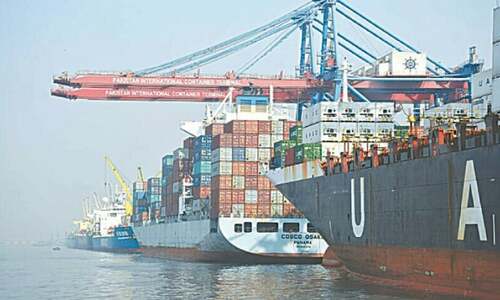
KARACHI: Local traders have said the imposition of a new tax on trade through Khyber Pakhtunkhwa and other restrictions were hurting bilateral trade with Afghanistan and Central Asian States.
In a statement, Junaid Makda, the Pakistan-Afghanistan Joint Chamber of Commerce and Industry (PAJCCI) president, said the two per cent infrastructure development cess (IDC) on trade through KP has impeded the growth of bilateral trade.
The levy, imposed by the KP government earlier this year, has resulted in a “double taxation burden” on traders who now have to pay taxes on their imports in Karachi and Peshawar. This created a “competitive disadvantage” for KP-based businesses.
Mr Makda said inconsistent cess policies across provinces have resulted in legal challenges and conflicts with the Afghanistan-Pakistan Transit Trade Agreement.
Head of joint chamber of commerce calls for uniform cess policies
This uneven regulatory environment is diverting trade away from KP, he claimed, adding that Afghan traders were exploring alternative routes, including through Iran due to additional costs at Torkham.
He said trade between Afghanistan and Pakistan has the potential to reach $7 billion but has not been growing due to restrictive measures taken by the government.
He pointed out three Statutory Regulatory Orders (SROs) 1380(I)2023, 1397(I)2023 and 1402(I)2023 issued in October 2023, which curtailed imports and exports to and from Afghanistan.
Through SRO 1380(I)2023, the federal government imposed a 10pc processing fee on several items — confectionaries, footwear, machinery, blankets, home textiles and garments imported into Afghanistan through Pakistan.
The SRO 1397(I)2023 banned the import of tyres, black tea, dry fruits, fabrics, cosmetics, vacuum flasks and home appliances through Pakistan.
The 1402(I)2023 introduced new regulations regarding bank guarantees for Afghan transit trade goods.
Mr Makda said these measures were not only harming the economy but also threatening Pakistan’s standing as a regional trade leader.
While supporting the documentation of the economy, the trader said these measures were inadvertently allowing informal channels to flourish.
Mr Makda advocated for uniform policies aligned with federal guidelines to ensure a fair and stable trade environment.
He urged the government to implement a comprehensive action plan to remove IDC and trade barriers on Pakistan’s exports.
The PAJCCI, with support of the Ministry of Commerce, works on fostering economic cooperation between Pakistan and Afghanistan and addressing cross-border trade challenges, he added.
Published in Dawn, November 17th, 2024