ISLAMABAD: A parliamentary panel on Tuesday expressed concerns over contaminated drinking water in urban and rural areas of Islamabad, as out of 127 tube wells in the federal capital, 22 were found to be unfit for human consumption.
A meeting of the Senate Standing Committee on Water Resources chaired by Senator Shahadat Awan took up a survey conducted by the Pakistan Council of Research in Water Resources (PCRWR) in June 2024 regarding water quality problems in Islamabad. The survey was shared by the Ministry of Water Resources secretary.
The secretary told the committee that out of 127 surveyed tubewells, 105 were safe and 22 were unsafe. Out of 108 water filtration plants, 69 were safe and 39 were unsafe.
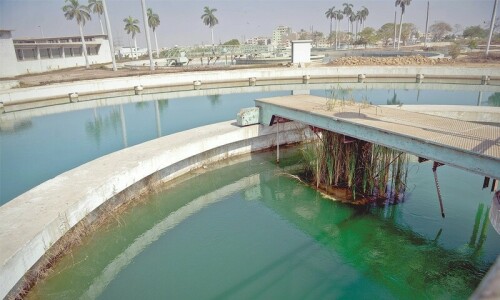
Regarding the 12 waterworks, seven were safe while five were unsafe. In rural areas, the situation is the worst — out of 41 water supply sources, 33 were unsafe.
According to the secretary, among 37 parameters tested, two major contaminants namely nitrates and microbial organisms were found in water.
39 out 108 filtration plants in capital unsafe; out of 41, 33 water sources in rural areas contaminated
Committee Chairman Senator Shahadat Awan expressed concerns over the unsafe water supply in the capital since 2019. He voiced dissatisfaction over such a situation, terming it alarming.
He urged the secretary of water resources to consult the Capital Development Authority (CDA) on this critical issue. He asked why there had been no action regarding the unsafe tube wells despite reminders by the ministry concerned.
He recommended the CDA conduct another test, particularly since officials from the water management claimed that 80pc of the water situation in Islamabad had improved, while this report from June 2024 showed otherwise.
He further requested the verification and analysis of water supply sources in Islamabad to ensure the accuracy of the data.
Besides contaminated water, the capital residents are also facing a water shortage. The daily need is around 220 million gallons per day (mgd) while the CDA supply is around 70mgd in urban areas (mainly from Simly Dam, Khanpur Dam and tube wells).
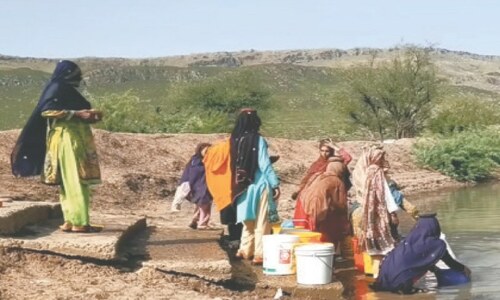
In rural areas, residents are dependent on small water schemes or groundwater. On the other hand, the underground water table is also depleting rapidly.
No new dam
Despite stress on groundwater and an increase in population, the CDA has failed to make serious attempts to explore new options to increase water supply.
Several projects, including proposed small dams like Chiniot Dam, Shahdara Dam, Chirah Dam (to be shared with Rawalpindi), were proposed, but construction work had not started yet. Similarly, a major scheme to provide 100mgd for Rawalpindi and Islamabad from Ghazi Barotha Dam, conceived in 2007, could not move beyond paperwork.
Water issue in Balochistan
During the briefing on groundwater depletion in Balochistan and the steps taken by the Ministry of Water Resources, the committee chairman highlighted that no survey had been conducted since 2021. Citing the example of groundwater depletion in neighbouring Iran, Senator Awan stressed the need to avoid a similar crisis in Pakistan.
Additionally, he enquired about the availability of accurate data regarding the number of tube wells installed after 2015. He further explained that there was a discrepancy in the facts provided to the committee.
The secretary of the Ministry of Water Resources commented that the lack of adherence to written directives had worsened the water situation in Balochistan.
The chairman urged the Balochistan Irrigation Department to prevent the installation of more tube wells in the province.
Published in Dawn, October 2nd, 2024