60 die as hurricane wreaks havoc in US southeast

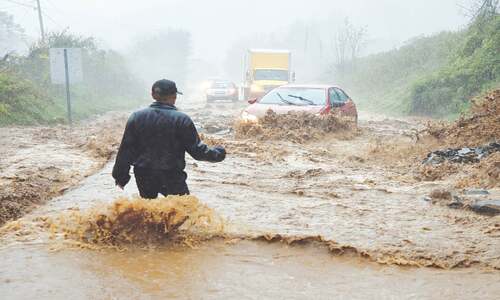
Washington: Southeastern US states started a massive cleanup and recovery effort on Sunday after winds, rain and storm surges from Hurricane Helene snuffed out power for millions, destroyed roads and bridges and caused catastrophic flooding from Florida to Virginia.
The storm caused at least 60 deaths, according to state and local officials in South Carolina, Florida, Georgia, North Carolina and Virginia. Officials feared still more bodies would be discovered across several states.
Damage estimates ranged from $15 billion to more than $100 billion, insurers and forecasters said over the weekend. Property damage and lost economic output will become more clear as officials assess the destruction.
The Federal Emergency Management Agency administrator, Deanne Criswell, on Sunday cited significant damage to water systems, communications and critical transportation routes.
Authorities estimate significant damage to water systems, communications and critical transportation routes in five states
The US government has enough resources to cope with the disaster, Criswell said on CBS’ “Face the Nation,” but the recovery will be difficult. Bottled water has been sent to affected areas and the Army Corps of Engineers will start assessing damage to water systems on Sunday to help them get back online, she said.
“Recovery can be complicated. These five states are going to have very complicated recoveries,” Criswell said.
Roughly 2.7 million customers remained without power on Sunday, a US Energy Department official said, down 40pc from Friday after unprecedented storm surges, ferocious winds and perilous conditions extended hundreds of miles inland.
Gulf Coast rains
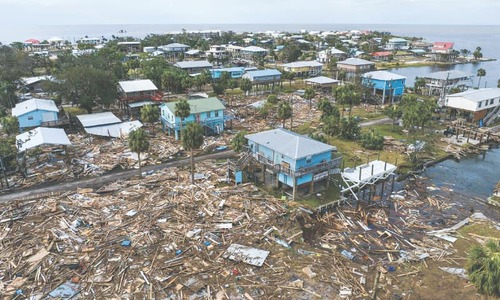
Days of driving rain followed Helene slamming into Florida’s Gulf Coast on Thursday night, destroying homes that had stood for decades. A total of 11 people died in Florida, Governor Ron DeSantis said on Saturday in the Gulf Coast city of Perry, which saw 15-foot storm surges, larger than those seen in hurricanes in recent years.
In Horseshoe Beach, on Florida’s Gulf Coast about 70 miles west of Gainesville, Charlene Huggins surveyed the debris of her blown-out house, pulling a jacket out of the rubble on Saturday.
“Five generations lived in this house, from my grandmother, my father, myself, my daughter, son, and my granddaughter,” Huggins said, holding a chipped glass cake stand. “So there’s a lot of memories here.
It just breaks your heart.“ Not far away, James Ellenburg stood on the property where his own family has lived for four generations. “I took my first step right here in this yard.” In coastal Steinhatchee, a storm surge — a wall of seawater pushed ashore by winds — of eight to 10 feet (2.4-3 metres) moved mobile homes, the weather service said.
The nearby tiny community of Spring Warrior Fish Camp was surveying the damage and still waiting for any emergency or first responder aid. “No one thinks of us back here,” said David Hall, as he and his wife dug through the seagrass and dead fish in the office of the hotel they owned. Many of the homes there are built on stilts because of a local ordinance and survived heavy damage.
Some of the worst rains hit western North Carolina, which saw almost 30 inches (76 cm) fall on Mount Mitchell in Yancey County, the National Weather Service’s Weather Prediction Centre reported. State transportation officials said more than 400 roads remained closed in the state, where the governor reported two deaths on Saturday.
Published in Dawn, September 30th, 2024