0
0

LAHORE: Planning Minister Ahsan Iqbal on Sunday emphasised the urgent need to mobilise both public and private sectors to produce affordable, environment-friendly renewable energy to alleviate the country’s electricity crisis and ease the daily lives of citizens.
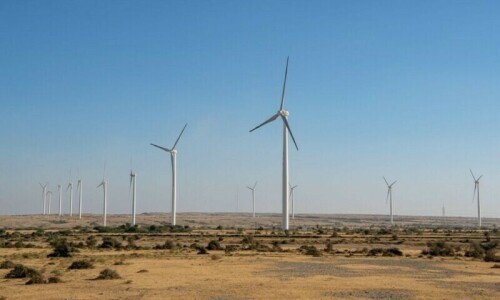
“Pakistan has immense potential to produce renewable energy from wind and solar,” the minister said, adding that around 30,000 megawatts could be generated from these sources. “However, to utilise this potential, we need to mobilise private and public finance,” he said while speaking on the final day of an international conference on renewable energy at the Lahore University of Management Sciences.
Mr Iqbal said the federal government was working on five important pillars to ensure the country’s transition from fossil fuels to renewable sources of energy.
“These pillars include a framework for innovation, to find technology-based solutions, mobilisation of finances through previously untapped or non-existing sources such as an Asia energy transition fund, policy harmonisation within Pakistan and across Asia, regional collaboration and the development of integrated energy markets across Asia, and ensuring a just energy transition,” he explained.
Ahsan Iqbal says 30,000MW can be generated from wind, solar
Referring to the recent floods in the country, he said that just two years ago, the country had faced a catastrophic disaster that caused $30 billion losses. Many economies, according to him, might have crumbled under such circumstances, but Pakistan appears resilient. “While our contribution to global emissions is less than one per cent, we are one of the seven countries most affected by climate change,” he said.
Mr Iqbal warned of the resurgence of diseases like typhoid and cholera in the wake of such disasters, with thousands of lives at risk. He expressed frustration at the lack of support from developed nations, which, despite having vast military budgets, fail to assist countries bearing the brunt of climate change caused largely by the rich nations’ practices.
The minister also shared data related to Asia, which is home to half of the world’s population, saying the continent is entering the “Asian Century” and will contribute significantly to global GDP. “We must avoid exacerbating the climate crisis and focus on constructive solutions. The West has often made irresponsible choices regarding energy consumption, which has worsened climate change.”
Mr Iqbal was of the view that renewable energy solutions must prioritise fairness, especially in remote areas like northern Pakistan and Balochistan. Looking ahead to 2047, the government’s vision encompasses the “5 E’s”, with one focusing specifically on energy, with a focus on making it affordable, green and accessible, he said.
Senator Sherry Rehman also addressed the conference, urging the mobilisation of finance to address the twin challenges of climate change and energy transition. Drawing from her experience as the federal climate change minister in 2022-23, she highlighted the opportunities and hurdles Pakistan faces in securing international finance.
During another session, Sher Ali Arbab, co-convener of the Parliamentary Forum on Energy and Economy, explained that energy policy in Pakistan remains highly centralised in Islamabad, despite devolution under the 18th amendment.
“While Balochistan, Khyber Pakhtunkhwa and Sindh have a lot of potential to produce hydropower, solar and wind energy, the centralised policy framework is severely limiting their ability to capitalise on this,” he said.
Other speakers included Dr Fiaz Chaudhry, chairman of the National Transmission and Dispatch Company (NTDC); Shahjahan Mirza, head of the Private Power and Infrastructure Board (PPIB); energy expert Haneea Isaad; and Syed Mustafa Hyder, head of the Pak-China Institute, among other Pakistani and international experts and researchers.
Published in Dawn, September 30th, 2024