UN rights chief voices ‘abhorrence’ of Afghanistan ‘vice’ law


 0
0


The UN rights chief on Monday slammed Afghanistan’s latest laws curtailing women’s rights, decrying the “outrageous” and “unparalleled” repression of half the country’s population.
Speaking before the United Nations Human Rights Council, Volker Turk made clear his “abhorrence of these latest measures”.
The Taliban government in Afghanistan — which took power in 2021 but is yet to be recognised by any other country — published a widely criticised law in August further tightening restrictions on women’s lives.
While many of the measures have been informally enforced since the Taliban’s takeover in 2021, their formal codification sparked an outcry from the international community and rights groups.
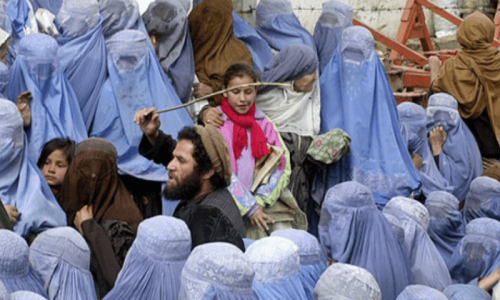
The new “vice and virtue” law dictates that a woman’s voice should not be raised outside the home and that women should not sing or read poetry aloud. It requires them to cover their entire body and face if they need to leave their homes, which they should only do “out of necessity”.
These measures, Turk pointed out, come on top of previous measures that included “forbidding girls from attending secondary school and women from attending university; denying women’s rights to freedom of peaceful assembly, opinion, expression and freedom of movement; and severely curtailing women’s rights to seek employment”.
He emphasised that “women who have sought to protest such laws or express any different opinion or form of dissent have faced harsh punishments”.
“I shudder to think what is next for the women and girls of Afghanistan.” His comments came after the UN Security Council last week called for the repeal of the new laws, warning they “undermine” efforts to reintegrate the country with the international community.
Turk meanwhile described the “repressive control over half the population in the country” as “unparallelled in today’s world”.
“It is a fundamental rupture of the social contract. It is outrageous and amounts to systematic gender persecution,” he told the council. “It will also jeopardise the country’s future by massively stifling its development,” he warned.
“This is propelling Afghanistan further down a path of isolation, pain, and hardship. “