0
0

Bangladeshi security forces have launched an operation to recover thousands of guns, including those seized during deadly unrest that led to the ouster of autocratic leader Sheikh Hasina, police said on Wednesday.
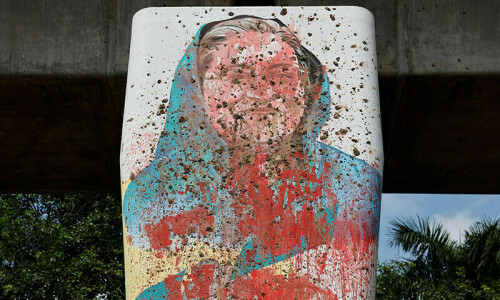
Weeks of student-led demonstrations escalated into mass protests, with Hasina fleeing by helicopter to neighbouring India on August 5 after 15 years in power.
Police had tried to stem the protests with gunfire but protesters responded by storming and looting police stations, when weapons were seized. Nobel Peace Prize laureate Muhammad Yunus is now leading an interim government after Hasina’s fall.
More than 3,700 weapons of different types had been recovered during an amnesty to surrender guns that ended on Tuesday.
However, more than 2,000 weapons, including rifles, are missing, along with thousands of rounds of ammunition and hundreds of tear gas canisters and stun grenades.
“Those arms which have not been submitted to the police stations within the deadline… the looted arms will be considered illegal,” senior police official Enamul Haque Sagor told AFP.
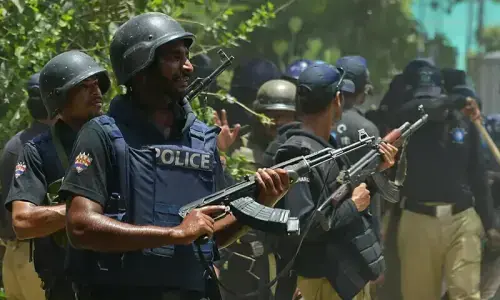
The army and police, as well as other security force units including the paramilitary Rapid Action Battalion (RAB) and Ansar forces, are taking part in the weapons sweep.
Two former top police officers have also been detained in connection to the violent suppression of the protests and have been placed on remand, Dhaka deputy police commissioner Obaidur Rahman said.
Both men face accusations of murder, although formal charges have not yet been made.
They include former police chief Chowdhury Abdullah Al Mamun, who quit a day after Hasina fled and has been taken into custody, Dhaka Metropolitan Police said in a statement late on Tuesday.
Police said he had “expressed his willingness to surrender — due to a case against him — while he was under army custody”.
He was placed under remand for eight days on Wednesday, Rahman said.
Another top officer, AKM Shahidul Haque, who had been police chief from 2014 to 2018, was detained on Tuesday and placed on remand for seven days, Rahman said.
More than 600 people were killed in the weeks leading up to Hasina’s ouster, according to the preliminary report of a United Nations rights team that said the toll was “likely an underestimate”.
Many of those killed were hit by police fire.