Tens of thousands evacuated from Russia’s Kursk region


 0
0


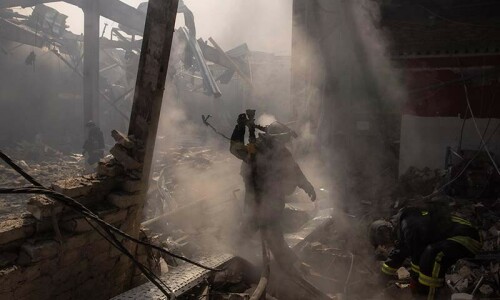
MOSCOW: Struggling to put down a major Ukrainian incursion for a fifth day, Russia on Saturday said it had evacuated tens of thousands of people from its border region, launched a “counter-terror operation” and warned that the fighting was endangering a nuclear power plant.
Ukrainian units stormed into Russia’s western Kursk region on Tuesday morning in a shock attack, the largest and most successful cross-border offensive by Kyiv of the two-and-a-half-year conflict. Its troops have advanced several kilometres and Russia’s army has rushed in reserves and extra equipment — though neither side has given precise details on the forces they have committed.
Kyiv has maintained a strict operational silence on the offensive and is yet publicly to confirm it is even behind the attack. Russia’s nuclear agency on Saturday warned of a “direct threat” to the nearby Kursk nuclear power station, and local officials detailed the scale of civilian evacuations from towns and villages close to the combat zone.
“More than 76,000 people have been temporarily relocated to safe places,” the state-run TASS news agency quoted an official from the regional emergency situations ministry as saying at a press briefing on Saturday.
Moscow discusses fate of nuclear plant with IAEA after Kyiv incursion
Emergency aid has been ferried into the border area and extra trains to the capital Moscow have been put on for people fleeing the fighting. “The war has come to us,” one woman said after arriving at a Moscow train station on Friday.
Russia’s army on Saturday confirmed it was still fighting the Ukrainian incursion for a fifth day. It said Kyiv initially crossed the border with around 1,000 troops, around 20 armoured vehicles and 11 tanks, though it claimed on Saturday to have destroyed five times that much military hardware so far.
‘Particularly effective’
Moscow also warned of the threat to the Kursk nuclear power plant, under 50 kilometres from the fighting, a day after the head of the International Atomic Energy Agency (IAEA) called for “maximum restraint”.
“The actions of the Ukrainian army pose a direct threat” to the Kursk plant in western Russia, state news agencies cited its atomic energy agency Rosatom as saying.
The United States, Kyiv’s closest ally, said it was not informed of the plans in advance but President Volodymyr Zelensky has appeared to tout his troops’ early successes in several cryptic remarks that do not explicitly mention the Kursk offensive.
Elsewhere on the frontline, Ukraine reported the lowest number of “combat engagements” on its territory since June 10. That could be a possible sign its incursion is helping to relieve pressure on other parts of the sprawling frontline where Moscow’s troops had been advancing.
‘Unprecedented’
Russia’s national anti-terrorism committee said that it was starting “counter-terror operations in the Belgorod, Bryansk and Kursk regions […] in order to ensure the safety of citizens and suppress the threat of terrorist acts being carried out by the enemy’s sabotage groups.”
The Belgorod and Bryansk regions also border Ukraine and likewise have been hit hard by shelling and aerial attacks since Russia launched its offensive in February 2022.
Security forces and the military are given sweeping emergency powers during “counter-terror” operations. Movement is restricted, vehicles can be seized, phone calls can be monitored, areas are declared no-go zones, checkpoints are introduced and security is beefed up at key infrastructure sites.
On the streets of Moscow, support for tough measures to quell the response were found, along with pockets of anger at how the incursion was allowed to happen.
Published in Dawn, August 11th, 2024