

At the beginning of the 21st century, military dictatorship made a comeback after (late) General Pervez Musharraf toppled the Nawaz regime to impose an emergency.
Musharraf, however, created an atmosphere of liberalism in the country during his rule, and also presided over the cable TV ‘revolution’, which included music channels. “There was a bit of freedom during the era when we saw a number of pop bands emerging,” recalls Aaroh’s Khalid Khan.
Musician and journalist Ali Haider Habib highlights that resistance during the 2000s wasn’t overly political, per se. “It was more against what people thought was acceptable or unacceptable — a multitude rather than resisting one entity.”
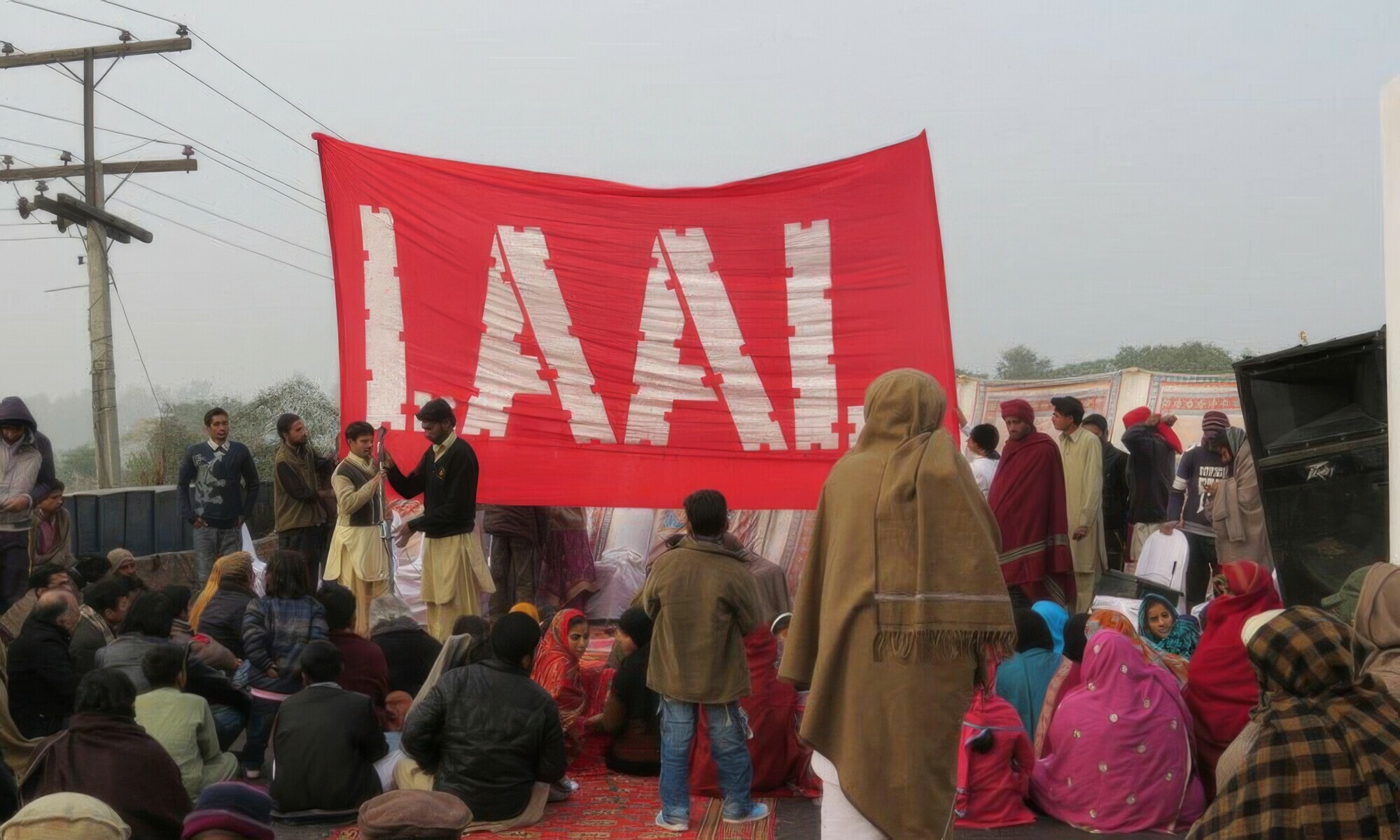
He recounts that Laal band was a big part of the resistance, whose song ‘Umeed-e-Sehar’ became the face of the Lawyers Movement that emerged as an uprising against Musharraf’s sacking of the Chief Justice of Pakistan in 2006.

Laal’s Taimur Rahman tells Dawn.com that he had been attending protests under the movement in London and that was where he got the idea to launch a band. “Laal was always set up with the intention of a protest band,” he says.
The band released its first album Umeed-e-Sehar on YouTube in 2007 and immediately shot to fame. With melting vocals, it serenaded the satire of Habib Jalib and the depth of Faiz Ahmed Faiz with ‘Musheer’ and ‘Hum Dekhain Gain’. “When we did our first album, we had the support of Geo TV who played our songs on their channel like 20 times a day,” Rahman recalls.
Amid the turmoil and confusion of the Musharraf era came forth ‘Laga Reh’. Shehzad Roy’s 2007 track, infused with political cynicism and satirical imagery, became a pop icon. The song took everyone, from the protesting lawyers to the numb society, to the cleaners.
“Although it was largely ambiguous, the song used wit to great effect,” notes Paracha.
Roy too recalls the impact of the song and the immense mainstream recognition it got. “It gave the younger lot the confidence and incentive to come out with resistance songs of their own.”
Then there was Najam Sheraz’s ‘Sona Chahta Hun’ that spoke of the people’s apathy towards the problems of the society. The bluesy composition combined with Sheraz’s unique style made the song one of the most critically acclaimed pieces of pop music in Pakistan.
Culture journalist Rafay Mahmood mentions Azal band’s edgy track, ‘Aisi Ki Taisee’. For the youth of the time, the confrontational line “System kee ghulami kyun karain (Why be slaves to the system?)” continues to speak truth till today.
Other notable resistance anthems from the decade include ‘Suno ke Main hun Jawan’ (2004) and ‘Kutte’ (2005) by Noori and Roy’s ‘Qismat Apne Hath Mein’, a sort of sequel to Laga Reh.