Bangladesh protests still on despite top court’s rollback of job quotas



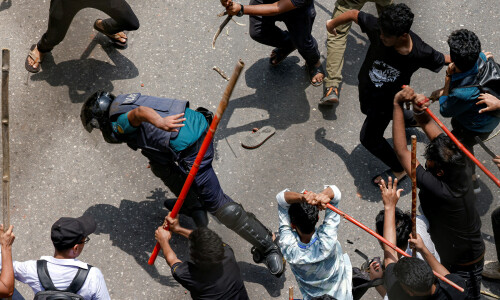
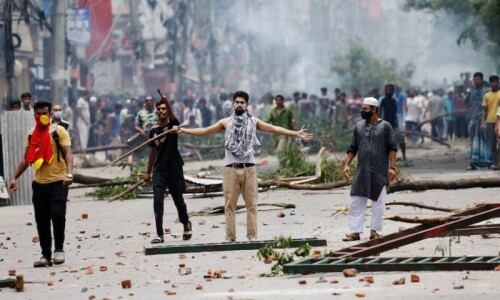
DHAKA: Bangladesh’s Supreme Court on Sunday scrapped most quotas on government jobs after nationwide action led by students spiralled into clashes that killed at least 139 people, but some organisers said the protests would continue.
Dismissing a lower court order, the Supreme Court’s appellate division directed that 93pc of government jobs should be open to candidates on merit, Attorney General A.M. Amin Uddin said.
A Bangladeshi student group whose demonstrations against civil service hiring rules precipitated serious nationwide unrest said on Sunday it would not abandon protests despite the SC ruling partially meeting their demands.
“We won’t call off our protests until the government issues an order reflecting our demands,” a spokesman for Students Against Discrimination told AFP, on condition of anonymity.
Student groups say ruling is unclear; Dhaka remains under ‘indefinite’ curfew
There was no immediate reaction from groups affected by reduced quotas following Sunday’s verdict.
The recent clashes followed similar violent protests ahead of January’s national elections by Sheikh Hasina’s opponents in response to what they called her authoritarian rule, and by garment workers demanding better pay amid high inflation.
The AG insisted that students had clearly said they were in “no way part of the violence and arson”. “I am hoping normalcy will return after today’s ruling and people with ulterior motives will stop instigating people,” he added.
Internet and text message services in Bangladesh have been suspended since Thursday, as security forces cracked down on protesters who defied a ban on public gatherings.
On Sunday, India said over 4,500 students returned home over the past few days. It said 500 Nepalese students and 38 from Bhutan also had arrived in the country.
Protests to continue
At least four protest coordinators told BBC Bangla that they planned to continue their action until they secured the release of some detained student leaders and the restoration of internet and other cellular services.
“The judgement of the Supreme Court seems unclear to us. There is no clear-cut solution for all types of quotas,” said Abdul Quader, one of the coordinators.
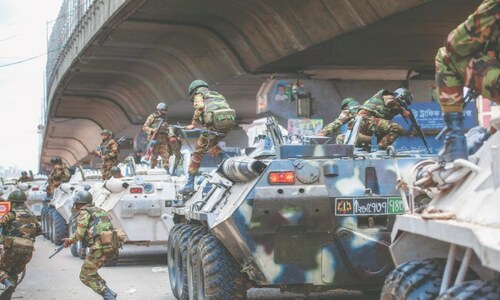
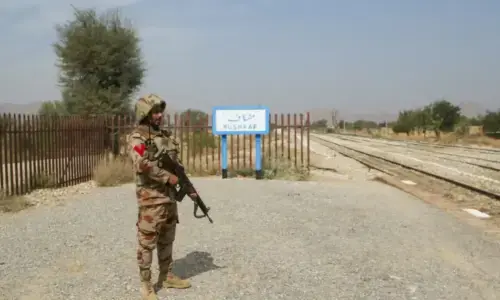
Soldiers have been patrolling the streets of Dhaka since the government ordered a curfew late on Friday. A tank was stationed outside the SC gates at the time of the hearing as Dhaka remains under ‘indefinite’ curfew .
At least 139 people have been killed so far, according to data from hospitals. Universities and colleges have been closed since Wednesday.
Published in Dawn, July 22nd, 2024