Five more die from heatstroke in Karachi as humid weather persists


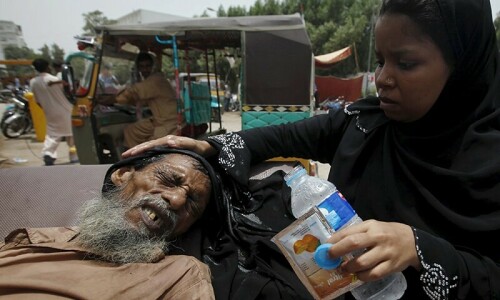
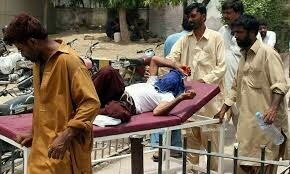
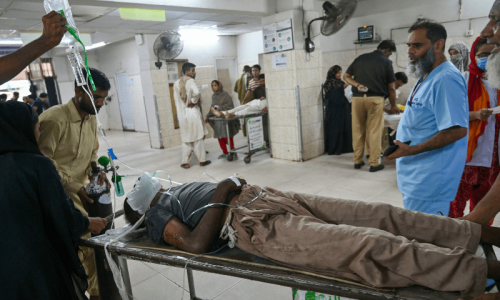
KARACHI: As citizens received little respite from excessive heat and humidity for the sixth consecutive day, five more patients being treated for heatstroke at different tertiary care hospitals died, sources told Dawn on Friday.
The maximum temperature recorded in the city was 39 degrees Celsius with 49 per cent relative humidity.
Hot winds blew across the city with occasional gaps and the city couldn’t see rain, at least till late evening hours, as was being expected in the light of met department’s forecast.
A Met department official explained that the low pressure area atmospheric pressure that brought about light rain in the city on Thursday had moved away. In addition, he said, the easterly winds reduced rain’s probability, though development of some cells might induce rain at night.
Weather system that brought rain on Thursday has moved away, says Met Office
In its daily advisory, the Met department had forecast dust-thunderstorm/rain with isolated heavy falls on Friday with temperature ranging between 35-38°C.
On Saturday, Karachi is expected to have hot and humid weather with maximum temperature ranging between 36-38°C and 70 to 80pc relative humidity in the morning hours.
There are chances of thunderstorm/rain.
Five deaths
Sources said three male patients died at the Jinnah Postgraduate Medical Centre while the Indus Hospital and Dr Ruth Pfau Civil Hospital Karachi reported one death each.
Sources said with this latest data, the total number of mortalities reported at those three tertiary care hospitals alone within a week now stood at 45. The mortalities included brought dead cases.
The actual number of cases, they said, was much higher as non-profit welfare organisations reported a three to four-fold increase in the number of dead bodies routinely received at their morgues.
These mortalities, they said, were likely to remain unaccounted for and ignored by the government.
“Most patients who died had other health complications. Hence, we can say that co-morbidity has been a major risk factor for mortality in cases of heatstroke,” a CHK doctor said.
Heatstroke, he explained, was a serious heat-related illness and occurred when the body could no longer control its temperature.
“The body’s temperature increases rapidly. The sweating mechanism fails, and the body is unable to cool down. When heatstroke occurs, the body temperature can rise to 106°F or higher within 10 to 15 minutes,” he said.
The three hospitals saw a significant decline in the number of heatstroke patients. A total of 26 and nine patients reported at the JPMC and Indus Hospital, respectively, on June 27. Twelve patients reported at CHK on Friday and late Thursday night.
Published in Dawn, June 29th, 2024