Pakistan stands at a crossroads as the two-pronged challenge of looming climate change and a lingering energy crisis burdens our economic future. They strain our land and livelihoods, threatening to dampen any hopes for a sustainable and self-reliant future. But is there a flicker of hope?
The fiscal year 2024-25 budget is an opportunity that can be used for course correction. Can this year’s financial outlay address the most pressing issues to ignite hopes for a brighter and more sustainable Pakistan? Only time will tell.
Despite its minimal contribution to global carbon emissions of 0.8 per cent, our country ranks eighth among countries most vulnerable to climate change. This vulnerability translates to substantial economic losses — over $3.8 billion annually, or roughly 0.5pc of GDP over the past two decades.
Our agricultural sector has been hard-hit in the past, with losses of over $30bn in 2022 alone due to climate-related disasters that endangered the livelihoods of thousands of farmers and small businesses.
Federal strategic interventions paired with public-private partnerships for solar financing are essential to accelerate the clean energy adoption process
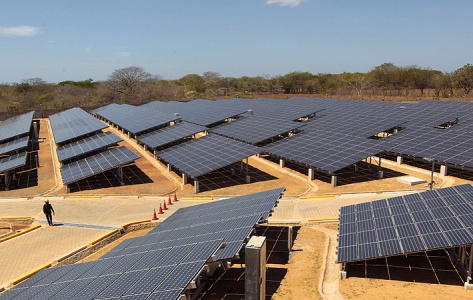
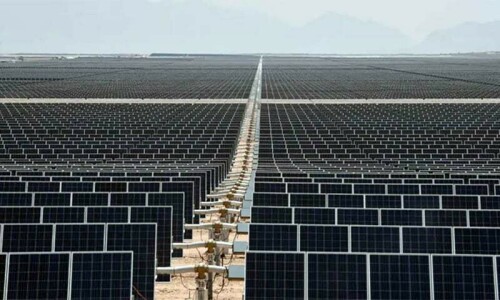
Pakistan is increasing its renewable energy capacity to mitigate the climate crisis and reduce dependence on fossil fuels. The FY25 budget is expected to allocate funds for large-scale and decentralised solar energy projects. This could include incentives like subsidies, tax exemptions, and potentially low-interest financing options for residential and commercial solar installations, making solar energy more affordable and accessible for the general population and small businesses.
While the government is admittedly late introducing much-needed initiatives, the private sector has been taking proactive measures to promote solar financing. However, financing is only the first step; it is equally essential for public and private organisations to prioritise investments in other renewable energy projects alongside solar energy.
Funds must be allocated to research and development in clean energy technologies and capacity-building programs, particularly for small-scale farmers and off-grid communities. The National Climate Change Policy and the State Bank’s green banking guidelines outline these issues, but execution remains stalled due to funding shortfalls.
While well-thought-out strategic interventions are essential for a smooth transition, public-private partnerships prioritising solar financing are equally crucial to accelerate the adoption process.
Another key element in this adoption process is net metering for rooftop solar panels. This policy is said to incentivise small businesses and low-income households to adopt solar power by allowing them to offset electricity bills, benefiting consumers, reducing grid strain, and contributing to the overall renewable energy targets.
However, the proposed shift to gross metering raises concerns as individuals and businesses will have to sell solar power to the grid at a lower rate than they buy it back at. This will naturally discourage investment and slow the shift to clean energy.
While the government’s desire to support struggling power companies is understandable, abandoning net metering altogether is not the most strategic approach. Implementing consistent policies that prioritise renegotiating expensive contracts with power producers and addressing system inefficiencies offer alternative solutions to achieve cost savings without slowing the adoption of renewable energy.
A more strategic approach would involve a multi-pronged strategy.
The first step should be renegotiating existing contracts with power producers, which can offer cost reduction without hindering renewable energy adoption. After that, addressing inefficiencies within the current grid infrastructure can increase savings.
These improvements, coupled with continued net metering, suggest a win-win scenario. Consumers would benefit from reduced electricity bills and access to clean energy, while power companies could maintain financial stability through renegotiated contracts.
Fostering a favourable renewable energy sector through net metering not only benefits our environment but also injects innovation and job creation in the energy sector.
That said, it is important to understand that a balanced approach is a mix of maintaining net metering for residential and small business installations while exploring gross metering for larger commercial setups. This will protect consumers and businesses while addressing some of the concerns raised by power companies.
However, before taking a concrete step, open and transparent discussions with all stakeholders — government, businesses, and banks — are essential for developing the best policy. By striking a balance between economic considerations and long-term energy security and climate goals, we can ensure a sustainable and secure energy future for all.
The writer is the interim CEO of Mobilink Bank
Published in Dawn, The Business and Finance Weekly, June 10th, 2024