0
0

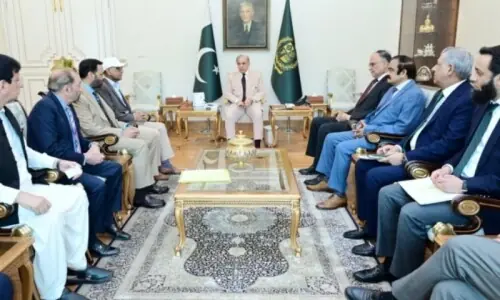
KARACHI: Chief Minister Syed Murad Ali Shah on Saturday directed the energy department to prepare a detailed proposal for the solarisation of small isolated villages under the Village Electrification Program.
While chairing a meeting to review Sindh Solar Energy Project at the CM House, he said that isolated villages’ electrification through solar/wind hybrid could be carried out on Public-Private Partnership mode, adding that the private sector would be assigned the task to run the system in a sustainable manner.
Mr Shah said that the private sector would bear the running expenses of the system, including salaries of the technical staff and the provincial government would bear periodic expenses of battery replacements.
Energy Minister Nasir Shah told the meeting that the Sindh Solar Energy Project (SSEP) was an initiative of the provincial government with the World Bank financing of a $100 million concessional loan approved by ECNEC in Nov 2018 and revised in July 2023.
He said that the project had four components, establishment of 400 MW solar parks through competitive bidding, solarisation of 50 MW public sector building, solar home systems to provide electricity to 200,000 households and capacity building by setting up a solar testing laboratory and training of solar technicians.
The meeting was informed that three pieces of land were allotted in Jan 2023, including 250 acres for 50 MW at Manjhand, Jamshoro, 612 acres for 120 MW in Deh Halkani /Murad Band, district West and 600 acres for 150 MW in Deh Mitha Ghar, district Malir.
Energy minister told the CM that the feasibility studies of the Manjhand and Karachi sites had been completed and added that the expression of interest for the prequalification process had been completed.
The CM was told that there was a target of 50 MW rooftop solar system on 110 public sector buildings. A 4-MW floating solar with battery backup near Ghulam Muhammad Barrage Hyderabad would be installed.
The CM was told that the under solar home system, the original implementation of the component was not successful due to a subsidy of only 40 per cent and the high costs of the system which resulted in only 322 systems being sold.
Published in Dawn, April 7th, 2024