0
0

Egyptian President Abdel Fattah al-Sisi was sworn in for his third term on Tuesday in the country’s new capital, the largest of the mega-projects that have come to symbolise his rule while stretching the country’s finances.
Speaking at the new parliament building, Sisi highlighted the challenges Egypt withstood in recent years while promising continued development, which many Egyptians say they feel excluded from.
“The past few years have shown that the path of nation-building is not paved with roses […] between terrorist attempts at home, sudden global crises abroad, fierce wars around us,” Sisi told lawmakers and religious, government, and military officials.
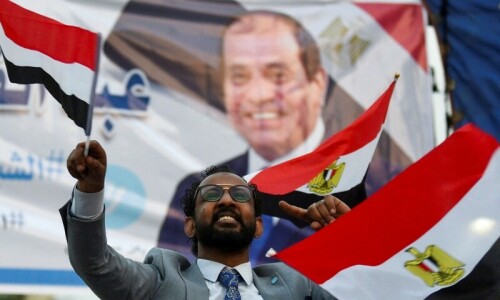
Sisi swept to victory in an election last December with 89.6 per cent of the vote and no serious challengers.
As bombardment raged in neighbouring Gaza, his message of stability and security resonated with some voters, but many, preoccupied with economic hardships, expressed indifference about the election, saying the result was a foregone conclusion.
“You carry a heavy load!” shouted one attendee during the ceremony, while another interjected, “If God is with you, then no one can be against you!”
In his speech, Sisi promised increased spending on programmes targeting the poor and engaging the private sector in line with commitments that helped secure last month’s expanded $8 billion deal with the International Monetary Fund.
Since Sisi became president in 2014, Egypt has embarked on an infrastructure splurge spearheaded by the military, which he says is essential for economic development and to accommodate a population that has grown by six million since hitting the 100m mark four years ago.
The $58bn New Administrative Capital in the desert east of Cairo is the largest of the mega projects, which also include an expansion of the Suez Canal, extensive road building and other new cities.
Critics blame such projects for contributing to Egypt’s economic woes, saying they divert resources away from more urgent needs and increase Egypt’s debt burden.
In his inauguration speech, Sisi promised investment in several sectors, including energy, as well as rationalised public spending and committed to continuing to build new cities.
Though economic troubles threatened Egypt’s stability, its global position has been bolstered by the Gaza crisis, in which it has served as the main conduit for aid and an initiator of ceasefire talks.
Sisi, a former intelligence general, rose to power a decade ago after deposing of the Muslim Brotherhood’s Mohamed Mursi, Egypt’s only freely elected president.
Rights groups estimate tens of thousands of people, including liberal activists and fighters, have been jailed since Mursi’s ouster.
Sisi and his supporters say that stability and security are paramount, and that the state is working to safeguard social rights such as housing and jobs.