DISAPPOINTMENT prevails in some quarters of the legal fraternity. Among those who seem particularly disturbed are lawyers who had hailed the change of guard at the Supreme Court last year as the beginning of a new era of judicial independence.
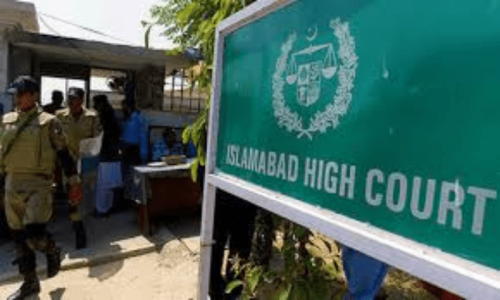
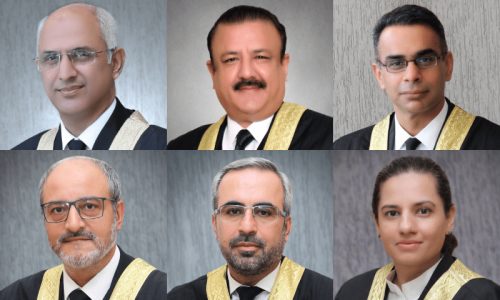
This week, when it emerged that six sitting judges of the Islamabad High Court had addressed a complaint to the chief justice of Pakistan detailing repeated interference by intelligence operatives in the judiciary’s workings — including attempts to spy on, threaten and intimidate judges — the expectation was that the Supreme Court would take a firm stand.
Considering that it has been facing criticism for ‘ignoring’ the executive’s growing list of human and civil rights abuses, and for failing to stop the frequent violations of court orders as well as laws and the Constitution, many were expecting that the apex court would put its foot down on interference in the judiciary’s inner workings.
Sadly, instead of taking action, the Supreme Court on Thursday passed the buck to the government. With the court’s consent, the concerns highlighted by the IHC judges will now be investigated by an inquiry commission — which is to be headed by a retired judge, and whose formation, composition and terms of reference are going to be decided by the federal cabinet.
Since the announcement, many have been wondering whether a retired judge can effectively cross-examine sitting high court justices and, more importantly, serving generals who may, directly or indirectly, be responsible for the serious misconduct their departments are allegedly involved in. Others have pointed out that the current government comprises individuals who either seem to be beneficiaries of the intelligence agencies’ alleged interference in judicial matters, or are responsible for these agencies’ actions by virtue of their ministries. How, then, can the court expect them to conduct an impartial inquiry? These are valid concerns.
A press release issued by the Supreme Court on Thursday noted that “The CJP clearly stated [in his meeting with the government] that interference by the executive in the affairs and judicial workings of judges will not be tolerated and under no circumstances can the independence of the judiciary be allowed to be compromised”.
Yet, the Supreme Court’s actions seem to belie a more accommodative approach. The IHC judges had merely asked for a judicial convention to discuss their ordeal, as well as directions from the Supreme Judicial Council on what judges ought to do when they face threats and coercion from the executive branch of the state.
Instead, the Supreme Court seems to have washed its hands of the matter by inviting the government to take over the inquiry. This course of action seems to run contrary to what one would expect from an independent judiciary jealously guarding its domain. It must, therefore, be reconsidered.
Published in Dawn, March 30th, 2024