ISLAMABAD: Speakers at a webinar here on Saturday urged all political parties and state institutions to respect the mandate given to candidates in the February 8 elections.
They said majority of winning independent candidates were backed by the PTI and they should be given the chance to take the course.
“Inclusive and collaborative political governance shall pave the future development discourse in the absence of clear majority at the federal level. Even the majority parties in provinces shall take other parties on board for an inclusive democratic stability.”
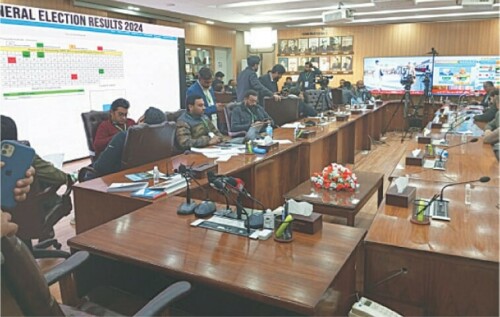
The webinar on “Pakistan’s elections 2024: emerging scenarios and future challenges,” was organised by Devcom-Pakistan on Saturday. The participants said the majority win of independents reflected that the public had rejected political engineering and establishment’s fiddling in the political process. They also questioned the Election Commission of Pakistan’s capacity to tabulate and announce the election results on time. Contrarily, the bit-by-bit announcement of results by TV channels has created doubts on the tabulation process, cast delusions and confusion. The internationally recognised standard process for the election results tabulation and announcements shall be adopted in future elections.
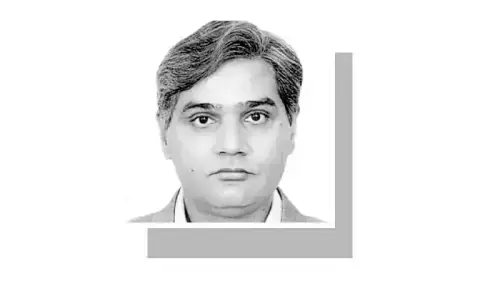
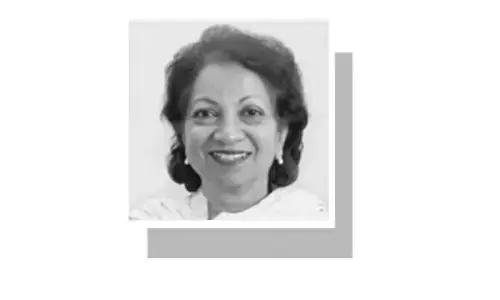
The speakers at the webinar included former senator Farhatullah Babar, constitutional expert Zafarullah Khan, Executive Director Devcom-Pakistan Centre for Geopolitical Studies Munir Ahmed, Associate Professor of International Relations at Lahore Garrison University Dr Zainab Ahmed, Associate Professor of political science at the Kinnaird College for Women Dr Khushboo Ejaz, Associate Professor at Bahria University Islamabad Dr Hassan Daud Butt, political activists Amina Sadaf and Sabeen Younas from Islamabad and Zammar Shahid from Quetta, National Defence University PhD scholar and governance specialist T.A. Bhutta, development experts Aftab Alam Khan and Qaiser Ejaz.
Speakers say inclusive political governance shall pave way for future development in absence of clear majority
Farhatullah Babar envisaged no role of establishment in Pakistan’s future political scenario. “They should understand that public’s political awareness has increased; now political engineering and manoeuvring would create extreme situations. In the emerging scenario, only inclusive alliances in parliament would deliver results. The split-mandate and populous politics may harm the democratic process if the rigidity reigned. Only stronger institutions within their mandate can control populism. All stakeholders should respect everyone’s vote,” he said.
Zafarullah Khan said: “Our political system is governed by many confusions and illusions. We need to sort it out for clarity of perceptions and practices. The present situation reflects that the public has rejected the role of establishment and its undue fiddling in the political process. Secondly, we shall accept the mandate given to the candidates and their role in the future discourse shall not be diminished.
“No party would be able to form its government independently. So, once again the split mandate would leave only the option of alliances. February 22 is the deadline for the Election Commission to notify the winning candidates while February 29 is the deadline to convene the first session of the new National Assembly.”
He urged the need for dialogue in politics while appreciating the direct-win of 12 women from different constituencies. He said digital poverty existed in Pakistan and the country gradually needed to move to the use of technology in the election process.
Munir Ahmed urged the civil society to play their supportive role to strengthen the political process beyond their political affiliations.
“It’s time to think beyond the vested interests and political conflicts. We should keep on raising our voices for inclusive parliamentary practices and development agenda,” he said.
Dr Zainab Ahmed highlighted the role of women in the election process, right from the campaigns to the voters’ mobilisation.
“With the present election and turnout, the electoral process is further strengthened because of the participation of youth and women. The institutions shall remain in their mandate and civil society shall play their role in supporting the new political government to perform,” she said.
Dr Khushboo Ejaz commended the participation of youth and lawyers and urged them to play their positive role. She said narrative building had become very important in the election campaigns.
“It would be a decisive element in the future as well. Now the establishment has to take into consideration the public opinion that their role in politics is no more wanted,” she said.
Published in Dawn, February 11th, 2024