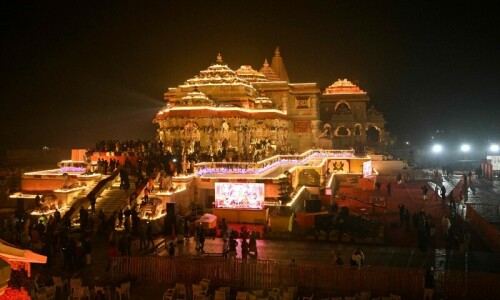
NEW DELHI: As a new temple in Ayodhya to Lord Ram may not have successfully invoked ‘divine’ support for India’s Prime Minister Narendra Modi’s third bid in polls due in May, the search for new sources of inspiration is on.
One such search has led to a Sufi shrine near Mumbai, which Hindutva allies have laid claim on to polarise voters, reports said on Monday.
A dispute, dormant for centuries with only sporadic stirrings, is being dusted and readied to fire in the run-up to the state assembly and Lok Sabha elections in Maharashtra, reports say.
The first sign that Malang-gad — located on a 789-ft hill in Ambernath in the Mumbai metropolitan region in Thane district — will be the centerpiece of the election season has come from Maharashtra CM Eknath Shinde himself.
Speaking at the annual Malang-gad Harinam Mahotsav in Thane, Mr Shinde, who broke away from the late Bal Thackeray’s Shiv Sena to lead a BJP-backed coalition, said he is “committed to liberate Malang-gad”, adding he would not rest till he had fulfilled the promise.
Malang-gad (’gad’ means a fort in Marathi) is famous for its 12th-century shrine of Sufi saint Haji Abdul Rahman, popularly known as ‘Haji Malang’. But Hindus believe the place holds the samadhi of Machindranath, a revered deity in Nathpanthi sect, which was later converted into a dargah.
An article published in The Times of India on Feb 14, 1993 reveals the arrest of Thane’s top Shiv Sena leader late Anand Dighe while leading an agitation demanding the renaming of Malang-gad as Shri Malang. Dighe was Mr Shinde’s mentor and the promise to liberate Malang-gad is a logical political move on the chief minister’s part to claim his master’s legacy.
According to The Times article, the Hindu-Muslim dispute on the trusteeship of the shrine is centuries old and the rift between the two communities over the shrine’s control goes back to 1817. The dispute was referred to the district collector and a lottery draw took place. On all three occasions, the lots favoured Kashipantnath Ketkar, an emissary of the ruling Peshwas. A member of the Ketkar family, to this day, occupies a seat at the dargah committee that manages the annual Urs in February.
However, Nasir Khan, chairman of the Peer Haji Malang Saheb Trust, refers to the Gazetteer of Bombay Presidency which mentions the structure as the shrine built in honour of Arab missionary Haji Abd-ul-Rahman. “It is only in the 1980s that the Shiv Sena began making claims of it being a Hindu temple. If it was a Hindu temple, why did the Peshwa kings send gifts to the shrine?” asks Mr Khan.
According to the chairman of the Trust, Haji Malang is equally revered by Hindu and Muslims. He says that even Christians and Parsis visit the shrine to seek blessings.
Published in Dawn, January 30th, 2024