Saudi Arabia to introduce new regulations on alcohol imports for diplomats


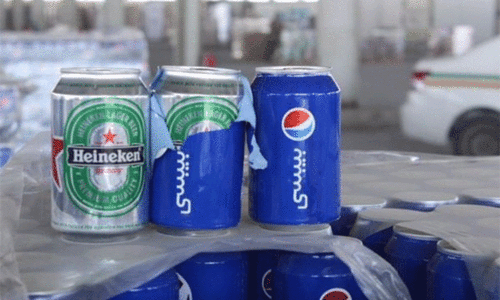
The Saudi government on Wednesday confirmed reports in state-controlled media that it was imposing new restrictions on alcohol imports within diplomatic consignments.
The kingdom’s Centre of International Communication (CIC) said the new regulations were being introduced to counter the illicit trade of alcohol goods and products received by diplomatic missions.
“This new process will continue to grant and ensure that all diplomats of non-Muslim embassies have access to these products in specified quotas,” the CIC said in a statement to Reuters.
The statement further said that the new framework respected international diplomatic conventions.
“The new process will focus on allocating specific quantities of alcohol goods when entering the kingdom to put an end to the previous unregulated process that caused an uncontrolled exchange of such goods in the kingdom,” it added.
The statement indicated that not much would change immediately for the vast majority of Saudi Arabia’s 32 million people, who have few ways to imbibe unless they are willing to travel abroad.
Meanwhile, a source familiar with plans and documents told Reuters that Saudi Arabia was preparing to open its first alcohol store in the capital Riyadh which would serve exclusively non-Muslim diplomats.
Customers will have to register via a mobile app, get a clearance code from the foreign ministry, and respect monthly quotas with their purchases, said the document, which was seen by Reuters.
The document added that the new store is located in Riyadh’s Diplomatic Quarter, a neighbourhood where embassies and diplomats reside, and will be “strictly restricted” to non-Muslims.
Sensitive subject
Prohibition has been the law of the land in Saudi Arabia since 1952, shortly after one of King Abdulaziz’s sons got drunk and, in a rage, shot dead a British diplomat.
Under Saudi law, penalties for consumption or possession of alcohol can include fines, jail time, public flogging and deportation for foreigners.
Rumours have swirled for years that alcohol would become available in the Gulf kingdom amid a wave of social reforms introduced as part of Crown Prince Mohammed bin Salman’s Vision 2030 reform agenda, among them the introduction of cinemas and mixed-gender music festivals.
Saudi Arabia, which was relatively closed off for decades, has in recent years relaxed strict social codes, such as segregating men and women in public places and requiring women to wear burqas.
Prince Salman’s tightening grip on power has been accompanied by changes which included opening the country for non-religious tourism, concerts and allowing women to drive, as well as a crackdown on dissent and political rivals.
Vision 2030 also includes developing local industries and logistics hubs and aims at adding hundreds of thousands of jobs for Saudi nationals.
Last year, Saudi Arabia was granted hosting rights for Expo 2030 and the World Cup in 2034, further fuelling speculation that the alcohol ban might be lifted, or at least weakened with carve-outs in places like NEOM, a planned $500 billion futuristic megacity.
However given that alcohol is forbidden in Islam, the issue remains deeply sensitive in the country.