0
0

KARACHI, Feb 23: Kidney stone disease in the South Asia had affected people, particularly children, by twenty to thirty per cent higher than the developed countries due to various factors including insufficient and poor healthcare facilities, malnutrition, poverty, and low budget allocation for health sector by the government.
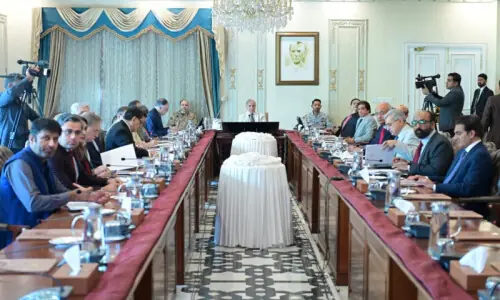
This was revealed on Thursday by various urologists, nephrologists and physicians from Pakistan and India at the Institute of Kidney Diseases, Liaquat National Postgraduate Medical and Health Sciences during the inaugural session of “Kidney Diseases in South Asia”.
The speakers including Prof Anwar Naqvi from SIUT, Prof Georgi Abraham from Sriramachndra Institue, Chennai, India, Prof Sudnand W. Thatte from Bombay Hospital, India, and Prof Jaffer Naqvi gave a brief view on kidney diseases in South Asia.
Prof Anwar Naqvi spoke over the spectrum of the stone diseases in South Asia. He said the prevalence of stone diseases in the developing world was five to ten times higher than the US and Carolina belt.
The ratio of disease occurrence in developed world was five to ten per cent as compared to developing world, which was twenty to thirty per cent higher, particularly in the Pakistan and India, he added.
He held insufficient healthcare facilities responsible for the occurrence and prevalence of these diseases. He said most of the victims of stone disease were children.
Prof Naqvi stressed the need for making joint efforts to cope with the diseases on their onset.
Prof Sudand W. Thatte highlighted the role of minimal invasive techniques in the treatment of kidney diseases, which he thought was more advantageous and with reduced risks.
Prof Tahir Shafi spoke on the challenges of dialysis in South Asia. He said that dialysis was an expensive adventure for most of the South Asians due to high ratio of poverty. Prof Georgi Abraham from Sriramachandra Institute, Chennai India, and Jaffer Naqvi also spoke on the occasion.
Earlier, Jaffer Naqvi at inaugural session highlighted the significance of the institute and announced the establishment of a medical college at the Liaquat National Hospital.—PPI