0
0

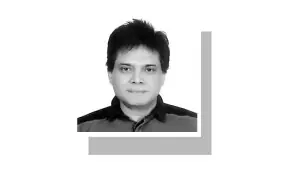
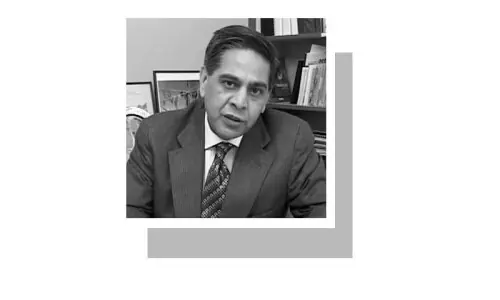
LAHORE: Mustansar Hussain Tarar has taken to task the Punjabi writers who discourage those who want to write in the language, especially those with the history of writing in other languages. He urged the Punjabi ‘literary establishment’ to welcome new writers who want to write in the language.
He was delivering a keynote address on the opening day of the three-day International Punjabi Conference at the Punjabi Institute of Language, Art and Culture (Pilac) here on Wednesday.
“Even if a Chinese man writes even a single sentence in your language, you should welcome him because he is contributing to your language. Faiz had written only one poem which is also not that good and Sharif Kunjahi used to write in Urdu. Would you start hounding Bedi because he wrote in Urdu,” he asked.
Tarar termed the attitude of discouraging writers in Punjabi as an inferiority complex. “Anybody who writes even a single word of Punjabi, I would be grateful to him.”
As for himself he said, “I write in Punjabi only when the language would make me write; otherwise, I can’t write”. He said his recent Punjabi novel, Mein Bhanna Dilli Dey Kingray, could be written only in Punjabi language and not in any other language.
Tarar came back to writing a Punjabi novel decades after the publication of his first Punjabi novel Pakhero.
“Urduwallas call themselves a part of Ganga Jamuna Tehzeeb, but I have never seen either the Ganges or the Yamuna properly. I have seen only Chenab of Heer.” Talking about his first Punjabi novel, Pakhero, he said Dr Karnail Singh Thind of the Guru Nanak Dev University transcribed his novel into Gurmukhi and termed it the first Punjabi novel of new trends or modernism. Five or six editions of Pakhero have been published in India.“
Regarding the refusal to take the Kamal-i-Fan award of the Academy of Letters that became a controversy last year, he said he had already written to the Academy 25 years back not to nominate any of his books for any prize.
Tarar said whenever somebody would come to meet him, he would ask them to converse with him in Punjabi.
“They ask for reasons for speaking Punjabi when I write excellent Urdu novels and speak Urdu on TV as well. I speak Urdu for livelihood. If you pay me to speak Urdu, I can speak the language; otherwise, I will speak only Punjabi.”
Conflicting Narratives:
A discussion on ‘Punjab: conflicting narratives’ was moderated by historian Dr Khola Cheema with Nain Sukh, Iqbal Qaiser and Zaheer Wattoo among the speakers.
Watto traced the origin of history in myths to the modern concept of history. He termed the word, history, loaded with politics as it included many things. “In modern world, one yardstick is used to understand history which is impossible because human beings are not machines and they all think differently.”
Iqbal Qaiser had a holistic image of Punjab in mind when talking of history with its widespread boundaries, from Ropar in India, Harappa in Pakistan and the spread of the civilization into Balochistan. He questioned whether we accepted the history of Punjab like Harappa and whether we considered Moenjodaro a part of it because the artifacts and stamps found there were similar.Nain Sukh said Punjab’s history was not written by the Punjabis themselves since Rigveda.
“We feel proud that Rigveda was written in the Punjab region but never talk about what it contained. Rigveda does not present a good picture of the local people, rather it looks down upon them for their physical features.” According to Rigveda, Indra, Surya and Agni were the villains. All this history was interpreted by the British, our thinking and constructs were made by the British.
“Vritra was the local who was fighting against Indra. Rigveda mentions that Vritra is reincarnated again and again after death and has snake as its symbol. We never thought who was Vritra.” Even Raja Porus was also ignored as he did not fit in the Hindu mythology.
Nain Sukh said Punjabis themselves never had solid arguments and facts while the rulers wrote their own version of our history and used it as a political tool.
“When the British called us ignorant, we accepted it because the ruling classes here before them had never owned Punjab. I saw the family history of 14 Rajput families and all of them call themselves migrants from Jaisalmer and other areas and considered themselves children of Raja Karan. There were Shajra writers in Bazaar-e-Hakeema (of Lahore) who would be paid to write family histories.”
Published in Dawn, December 21st, 2023