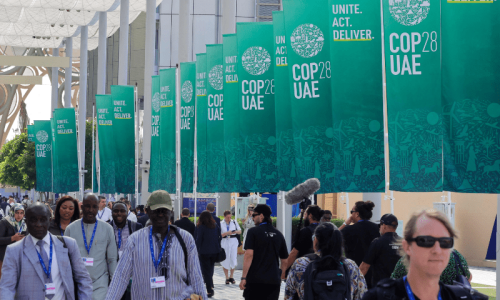
Arab officials attack bids to phase out fossil fuels at COP28


Arab officials on Tuesday hit out at attempts to secure a phase-out of fossil fuels at COP28 as they met for a conference on regional energy cooperation in Doha.
Campaigners had hoped the UN climate summit in Dubai could deliver a historic, global phasing out of the high-emission fuels which account for three-quarters of greenhouse gasses.
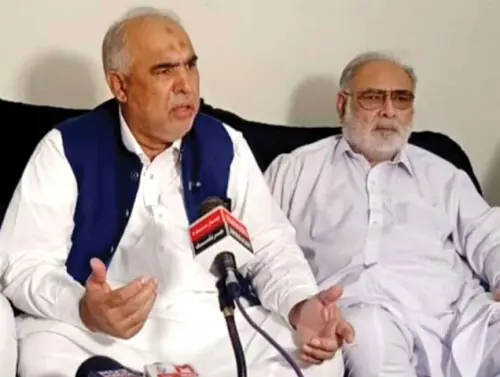
However, Kuwait’s oil minister dismissed the proposal as an “aggressive attack”, and accused Western nations of trying to dominate the global economy through alternative energy sources.
“I am amazed at this extraordinary insistence on depriving peoples and many countries, most of them in the developing world, of a basic source of energy,” Saad Hamad Nasser Al Barrak told the meeting of the Organisation of Arab Petroleum Exporting Countries (OAPEC).
The Kuwaiti official lambasted the approach as “racist and colonial”, saying it amounted “to cutting off important parts of our economies in the region on which our future depends”.
Barrak called the move “completely unacceptable”, and added that he wondered on that basis how the negotiations at the climate conference “lasted this long”.
Saudi Arabia, the world’s largest oil exporter, has led opposition at the UN climate summit to the move away from hydrocarbons.
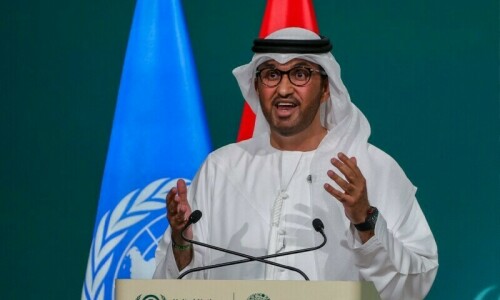
On Tuesday, Western powers and those nations most threatened by climate change fought against Saudi Arabia for stronger calls on exiting fossil fuels as negotiators worked past a host-set deadline at the summit.
In Doha, Iraq’s oil minister, Hayyan Abdul Ghani Al Sawad, said: “Fossil fuels will remain the major source of energy in the whole world. We cannot phase out the use of that energy.”
He also took aim at nations that consume fossil fuels.
“We as Arab countries, we produce this energy, but we are not the producer of emissions,” he said.
“The users need to develop the technologies to reduce their emissions,” he said.
Mohammed Mubarak Bin Daina, Bahrain’s oil and environment minister, said petrol and oil were “a main factor in our economies”.
“We should focus and preserve this industry and consume its derivatives in a balanced way,” he said while calling for emissions reductions and the further use of renewable energy.
The two-day conference in gas-rich Qatar has also been attended by officials from Algeria, Libya and Oman, as well as Saudi Energy Minister Prince Abdulaziz bin Salman.