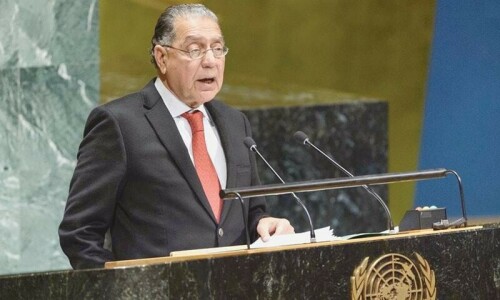
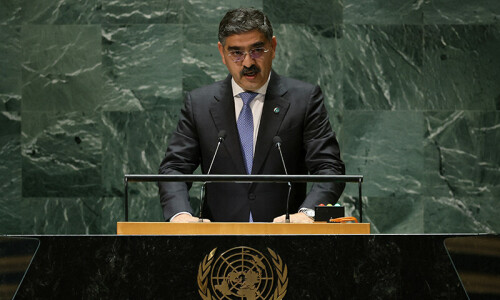
UNITED NATIONS: The UN General Assembly has adopted four resolutions proposed by Pakistan, aimed at advancing nuclear disarmament and bolstering global security measures.
Two of these resolutions garnered unanimous support, while the others received overwhelming approval, marking a significant step towards fostering regional and global stability and reflecting widespread support for Pakistan’s stance on these critical issues.
The first two resolutions, “Regional Disarmament” and “Confidence-building Measures in the Regional and Sub-regional Context” symbolised a collective commitment to fostering cooperation and trust among nations, crucial elements in mitigating conflicts and tensions.
Move reflects support for Islamabad’s stance on critical issues
The resolution on “Conventional Arms Control at Regional and Sub-regional Levels” faced some resistance, with 186 out of 193 UN member states supporting it. Notably, India cast the sole dissenting vote, underscoring the geopolitical complexities surrounding arms control issues in South Asia.
Pakistan’s fourth resolution, titled “Conclusion of Effective International Arrangements to Assure Non-Nuclear-Weapon States Against the Use or Threat of Use of Nuclear Weapons,” received approval with 123 votes in favour.
One key aspect highlighted in the resolutions is the recognition of excessive conventional military danger in the regional context, implicitly referring to the situation in South Asia.
The proposed measures aim to address associated risks and encourage efforts to promote confidence-building measures at regional and sub-regional levels, fostering an environment conducive to easing tensions. Additionally, the resolutions emphasise the importance of further disarmament and nuclear non-proliferation measures, aligning with broader global objectives.
The resolution on conventional arms control at regional and sub-regional levels underscores the importance of maintaining a balance in states’ defence capabilities to strengthen peace and stability. This recognition underlines the need for strategic equilibrium to prevent destabilising military build-ups.
Published in Dawn, December 6th, 2023