150 factories shut in Bangladesh amid violent protests


DHAKA: Bangladeshi garment manufacturers on Saturday shuttered 150 factories “indefinitely”, as police issued blanket charges against 11,000 workers in connection with violent protests demanding a higher minimum wage, officers said.
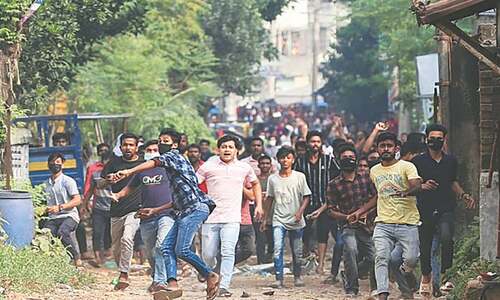
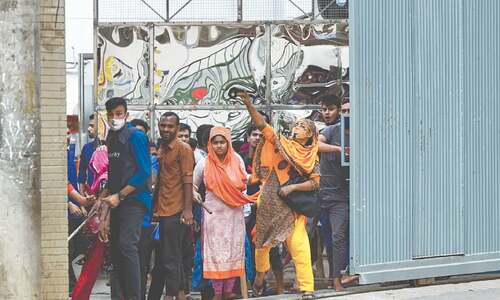
Violent protests demanding better pay erupted last month, with at least three workers killed and more than 70 factories ransacked or damaged since. Just a couple of day ago 15,000 workers clashed with police on a key highway and ransacked Tusuka, a top plant, along with a dozen other factories.
“Police have filed cases against 11,000 unidentified people over the attack on Tusuka garment factory,” police officer Mosharraf Hossain said.
Bangladesh’s 3,500 garment factories account for around 85 per cent of its $55 billion in annual exports, supplying many of the world’s top brands including Levi’s, Zara and H&M. But conditions are dire for many of the sector’s four million workers, the vast majority of whom are women whose monthly pay, until recently, started at 8,300 taka ($75).
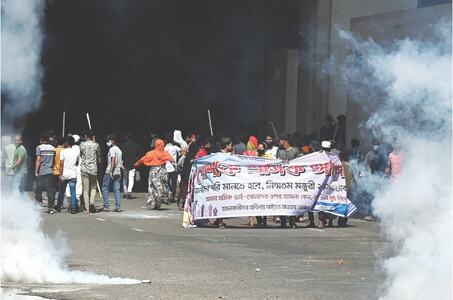
While a government-appointed panel on Nov 7 raised the sector’s wage by 56.25pc to 12,500 taka, garment workers rejected the hike and demanded a minimum wage of 23,000 taka.
Police said 150 factories had closed in the major industrial towns of Ashulia and Gazipur, both north of the capital Dhaka, as manufacturers feared further strikes when Bangladesh’s working week began on Saturday.
“The manufacturers invoked Section 13/1 of the labour laws and shut 130 factories at Ashulia indefinitely citing illegal strikes,” said Sarwar Alam, head of police in the manufacturing hub.
Ashulia is home to some of the biggest Bangladeshi factories, with some employing as many as 15,000 workers in a single multi-storied plant. On Thursday, police fired rubber bullets and tear gas at around 10,000 workers in Ashulia when they attacked officers and factories with bricks and stones.
At least 20 factories were also shut down in Gazipur, which is the largest industrial zone in the country, said its police chief Mohammad Sarowar Alam.
The minimum wage protests over the past two weeks have been the worst in more than a decade, yet the prime minister has rejected any further pay hikes for workers, with a warning that violent protests could disrupt production and exports rendering them jobless.
On the other hand, Washington has condemned “violence against protesting workers”. The US, which is one of the largest buyers of Bangladesh-made garments, has called for a wage that “addresses the growing economic pressures faced by workers and their families”.
Published in Dawn, November 12th, 2023