0
0

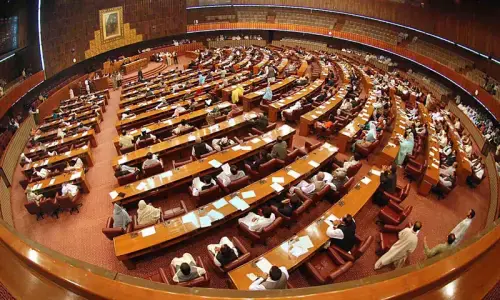
UNITED NATIONS: Revitalisation of the UN General Assembly (UNGA) is a political, not a procedural issue, says Pakistan while urging the world body to enhance its credibility by ensuring the implementation of its own resolutions.
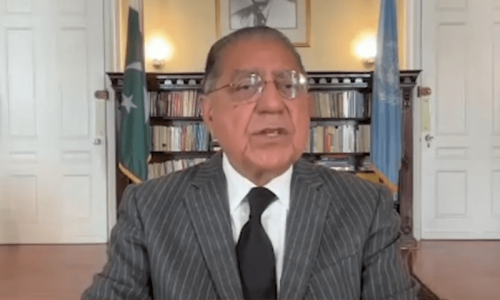
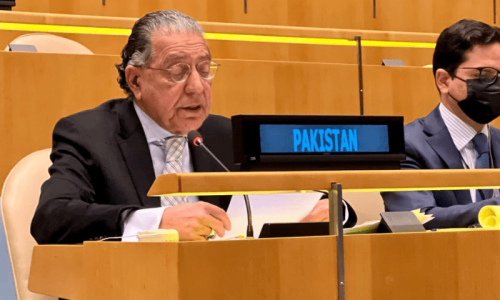
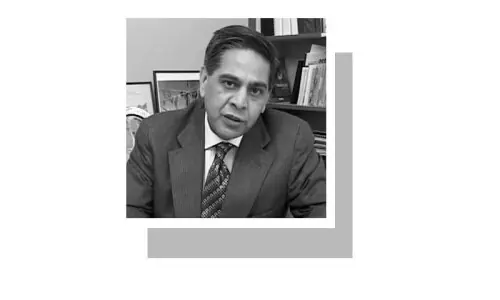
“While we need to improve the assembly’s processes and methods of work, the revitalisation of the assembly is a political issue, not one of process only,” said Pakistan’s UN ambassador Munir Akram in a speech on UNGA reforms.
The ambassador argued that the UNGA’s deficiencies arise from “the inability and in large measure, the unwillingness of some of major member states to allow the assembly to fully utilise its authority and potential.”
Ambassador Akram, in his statement at the UNGA plenary meeting on Friday, highlighted the need to rationalise the assembly’s agenda, streamline resolutions, and improve the secretariat’s reports to enhance efficiency and save resources.
Emphasising the assembly’s broad authority under the UN Charter, he the assembly’s deficiencies stem from major member states’ unwillingness to fully utilise its authority.
Emphasising the political nature of revitalisation beyond procedural improvements, the Pakistani envoy welcomed recommendations to organise meetings more effectively, adopt specific decisions, and address financial concerns.
However, Mr Akram underscored the assembly’s role in peace and security, and mentioned its complementary authority when the Security Council was unable to act. He urged Security Council members to limit thematic issues to preserve the General Assembly’s legitimate role.
The statement addressed two areas of concern: non-proliferation and counter-terrorism. Pakistan argued that the General Assembly, rather than the Security Council, should oversee the comprehensive implementation of the Global Counter Terrorism Strategy.
To enhance credibility, Mr Akram proposed a dedicated mechanism to monitor the implementation of Assembly resolutions, with the Secretariat providing status reports.
Concerns were raised about the Security Council appropriating law-making functions, departing from the inclusive process mandated by the Charter. Pakistan also called for the assembly’s reassertion of its role in developing international law.
Published in Dawn, November 12th, 2023