ISLAMABAD: In his address to a special Organisation of Islamic Cooperation (OIC) meeting in December 2021, then-prime minister Imran Khan urged the world to take immediate action and save Afghanistan from descending into chaos.
The remarks were made four months after the Afghan Taliban took over Kabul and at a time when Pakistan was seeking global support to help the fledgling Afghan economy and avert a “humanitarian crisis”.
Almost two years later, the tone from both sides of the border has become less conciliatory, while recriminations have made bilateral ties more acrid.
At the heart of this acrimony lies the spike in terrorist attacks in Pakistan, the presence of outlawed Tehreek-i-Taliban Pakistan (TTP) in Afghanistan and the deportation of ‘illegal’ Afghans to their homeland.
Pakistan has seen a 60 per cent increase in terrorist incidents and 500pc in suicide blasts since the interim Afghan government took power in August 2021.
On Wednesday, caretaker Prime Minister Anwaarul Haq pinned the blame for attacks on the Taliban government, leading to a scathing riposte from Kabul.
Afghan Taliban spokesman Zabihullah Mujahid shrugged off any responsibility for attacks “which take place far away from our borders”.
“This is not our responsibility if the Pakistani Taliban have focused on attacks on the other side,” Mr Mujahid said in an audio clip. “[W]e do not allow the TTP to use Afghan soil. We do not support the TTP.”
Pakistan’s decision to expel nearly 1.7 million undocumented Afghan nationals has further pushed the two sides to extremes.
Key Taliban government leaders and ministers have expressed vexation over the move, and the interim Defence Minister Mullah Yaqoob warned Pakistan of “consequences” for “whatever it has been doing with Afghanistan”.
The accusations made by Pakistan and the Taliban government have led to a deepening mistrust that could harm counterterrorism efforts, according to experts.
Qazi Humayun, who has served as director general of Afghanistan at the Ministry of Foreign Affairs, said public statements on sensitive issues are not helpful for relations with Kabul and should be avoided.
Mr Humayun, who has also served as the ambassador to Kabul, explained the situation “needs to be handled with maturity as we cannot wish away the geographical situation”.
‘Inaction’ against TTP
While the decision to expel undocumented foreign nationals was taken recently, the ties between Kabul and Pakistan had been frosty for some time — the reason: how to deal with TTP.
TTP and Afghan Taliban are old allies and fought the US and Nato forces together. Since its inception in 2007, the banned militant group has declared allegiance to the Afghan Taliban chief Mullah Omar.
This relationship continues until today, and the Afghan Taliban never rejected their ties with TTP.
Despite that, policymakers in Pakistan expected the regime in Kabul to take action against the TTP, which turned out to be a hope in vain. Violent attacks increased after the TTP called off the ceasefire agreement with the Pakistan government in Nov 2022.
The PDM government also ended negotiations with the TTP started by ex-PM Khan and launched targeted operations against the group.
Islamabad’s frustration with Kabul on this issue grew following a deadly attack on the Zhob garrison in Balochistan on July 12. Nine soldiers were martyred when the garrison was stormed by five attackers, three of whom were Afghan nationals from Kandahar, as per the claims of Pakistani officials.
Expulsion of illegal refugees
Tensions have apparently come to a tipping point over the mass repatriation of ‘illegal’ Afghan refugees from Pakistan.
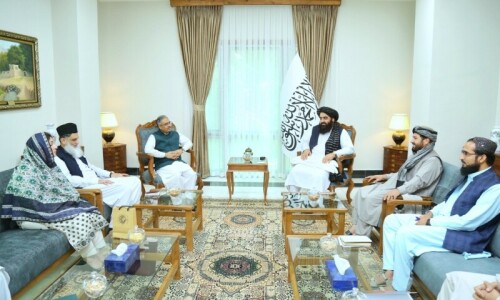
Afghan Interim Minister Amir Khan Muttaqi on Nov 6 called Pakistan’s decision to expel undocumented Afghan refugees “unilateral”. Pakistan, meanwhile, claims the two sides had engaged over the issue.
Last week, Foreign Office Spokesperson Mumtaz Zehra Baloch said the plan was discussed with Afghan authorities.
“The Afghanistan government’s concerns have also been discussed, and we have tried to explain to them that this policy is not Afghan-specific, it does not pertain to refugees, it pertains to those who are here illegally,” she said.
Former ambassador Humayun has also questioned the deportation and said the goodwill Pakistan earned over the past 40 years “has eroded” with this decision.
The way forward
Both Pakistan and Afghanistan should refrain from public accusations and open the established diplomatic channels to address concerns.
In the past, the two sides had agreed to use the comprehensive bilateral dialogue system introduced during the government of former president Ashraf Ghani.
During the visit of former foreign minister Shah Mehmood Qureshi to Kabul in Oct 2021, both sides agreed to use the Afghanistan-Pakistan Action Plan for Peace and Solidarity forum, and it is high time to revisit that agreement.
Mr Humayun has also warned that the current approach will lead to “further tension between Pakistan and Afghanistan and aggravate ties which are [already] at a low point”.
He warned that these tensions could provide India the space to strengthen relations with the Afghan Taliban government.
Published in Dawn, November 10th, 2023