ISLAMABAD: Consumer inflation in October eased to 26.9 per cent, the lowest level since December last year, as prices across almost all groups of commodities and services rose at a slower pace compared to last year, official data showed on Wednesday.
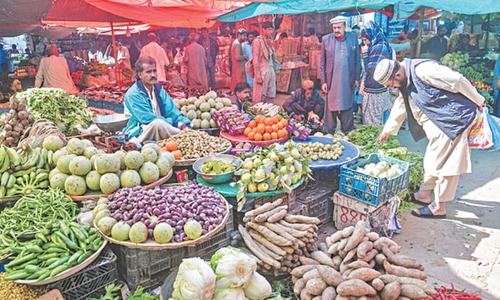
In fact, the prices in one category — perishable food items — fell 1.89pc compared to the same month a year ago, something last happened when Imran Khan was in power. In December 2021, prices in the same group dropped 10.2pc year on year, the Pakistan Bureau of Statistics (PBS) data showed.
However, October’s figure of 26.9pc was still high since the headline inflation — measured by a basket of goods and services called the Consumer Price Index (CPI) — has remained above 20pc since June last year, suggesting that inflation is still remarkably elevated despite a high base.
This latest data brings down the average inflation rate for the fiscal year (July-October) to 28.48pc, though still way above this fiscal year’s target of 21pc.
Annual change in CPI at 26.9pc lowest since December last year
On a month-on-month basis, inflation dropped to 1.1pc in October from 2pc in September.
Core inflation, which strips out volatile food and energy prices, was almost steady at 18.5pc compared to 18.6pc last month.
Analysts say inflation has come down because of lower domestic food and fuel prices and a stronger rupee.
“On a month-on-month basis, inflation has slowed down to 1.08pc versus the last three months averaging 2.4pc,” said Mohammad Sohail, CEO of Topline Securities.
Economic analyst Adnan Sheikh said: “Going forward, risks will persist regarding international oil prices amid Middle East tensions along with balance of payment management.”
A finance ministry report shows that inflation declined in October due to downward adjustments in fuel prices, easing prices of some major food commodities, and a “favourable base effect”.
It further predicted that inflation would decline substantially from the second half of this fiscal year, barring any major adverse developments.
The international food prices trend, as reported by the UN’s Food and Agriculture Organisation, indicates a relatively stable situation in September. While certain food categories, like vegetable oils, dairy and meat prices witnessed a decline, others like sugar and cereals recorded an increase.
These fluctuations balanced out, resulting in an overall index value of 121.5 points, nearly identical to August 2023.
On the domestic front, the government has slashed the petrol and diesel prices for two consecutive reviews, capitalising on declining global crude rates and a stronger domestic currency. These developments are expected to mitigate the inflationary pressures in the country.
Moreover, the subsequent efforts of the subnational governments to implement lower fares of local public and freight transportation, in line with the reduced fuel prices, would further relieve stress on consumer prices.
The PBS data showed that despite a drop in the pace of price hikes, the rates of several commodities still rose significantly.
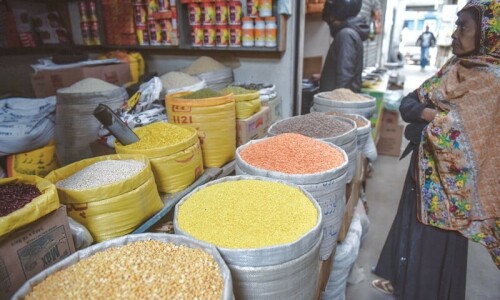
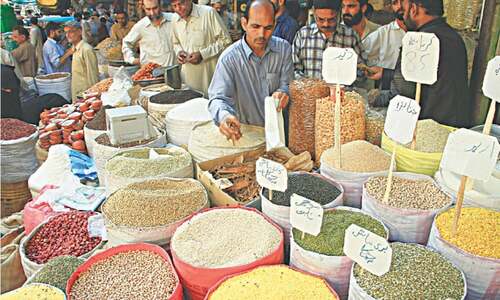
In urban areas, for instance, the prices of condiments and spices jumped 84.5pc year on year, followed by sugar (69.9pc), gur (64.8pc), wheat flour (63.4pc), rice (62.3pc), beans (56.8pc), tea (54.9pc), beverages (45.9pc), wheat products (43.5pc), dry fruits (42pc), dessert preparation (41.9pc), potatoes (41.4pc), pulse mash (39.7pc), wheat (37.7pc) and milk powder (36.6pc).
Published in Dawn, November 2nd, 2023