Settlers on a rampage in West Bank villages



TAYBEH: Within an hour, the Bedouin village of Wadi al-Seeq in the occupied West Bank had been completely emptied, its 200 residents fleeing on foot with their sheep and goats.
On October 12, five days after the start of Israeli hostilities against Gaza, residents say dozens of Israelis turned up at the village and gave them an hour to leave their land, among them settlers, soldiers and police.
Residents said some were local settlers dressed in army uniforms who have regularly harassed the village, while others wore civilian clothing, with army and police vehicles also at the scene.
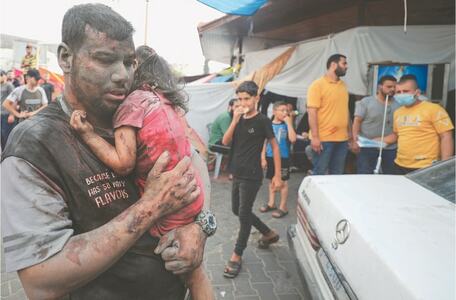
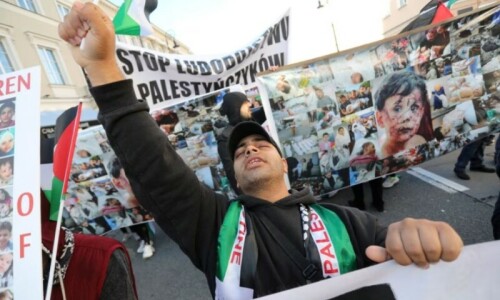
The violence in Gaza has sparked widespread unrest in the West Bank, which has been occupied by Israel since the 1967 Six Day War and where more than 110 Palestinians have been killed since the beginning of the war in clashes with soldiers or settlers.
The Israeli army had no immediate comment on the incident, despite several AFP requests.“We are paying for what happened,” said Abu Bashar, a leader from Wadi al-Seeq, a village of Palestinian herders that lies some 10 kilometres (six miles) east of the city of Ramallah, who has taken refuge with a dozen other families on private land in Taybeh slightly further north.
About three million Palestinians live across the West Bank, which is dotted with Jewish settlements that are considered illegal under international law, but are home to 490,000 Israelis.
Since the Gaza war broke out, settler attacks against Palestinians have more than doubled, from an average of three to eight incidents a day, according to the UN humanitarian agency OCHA, citing incidents of intimidation, theft and assault.
“We don’t sleep anymore, it’s a nightmare”, said Alia Mlihat, who lives in Muarrajat, another Bedouin village between Ramallah and Jericho. She’s afraid her village will be next in line. “With the war, we’re seeing the settlers have more weapons, it’s very difficult,” she told AFP.
“We’re living through a new Nakba because of settlers and the army,” she said, using the Arabic word for “catastrophe” when some 760,000 Palestinians fled or were expelled from their homes during the 1948 war that accompanied Israel’s creation.
That year, the Mlihat family, like most Palestinian Bedouins, left Israel’s Negev Desert for the West Bank.
Published in Dawn, October 30th, 2023