Senate committee summons PM’s secretary over ‘missing’ bill issue


 0
0


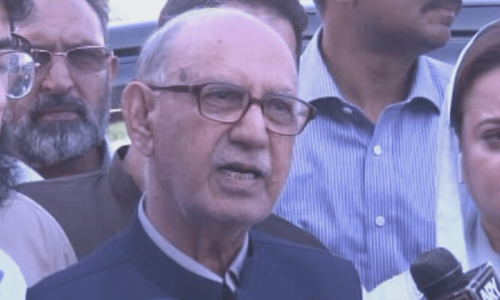
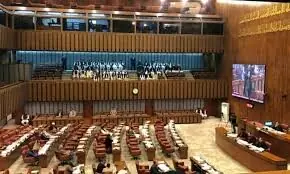
The Senate Standing Committee on Interior on Thursday summoned the prime minister’s secretary over the issue of an allegedly missing bill of Senator Irfan Siddiqui, which focuses on separating the judiciary from the executive by clipping judicial powers being enjoyed by bureaucrats posted in Islamabad district administration.
The PML-N senator had raised the issue of his missing bill titled ‘Code of Criminal Procedure (Amendment) Bill 2022’ with the committee, which then decided to take it up in its meeting.
In June last year, after the Senate, the National Assembly also gave its consent to the bill that sought the separation of the judiciary and the executive by clipping the judicial powers of assistant commissioners, the deputy commissioner and the commissioner.
After the approval from both houses, the bill was supposed to be sent to President Dr Arif Alvi for ratification, but, according to the mover, it “disappeared”.
During the Senate committee meeting today, Siddiqui recalled that he was arrested in 2019 and presented before a junior assistant commissioner who sent him to jail for 14 days.
Siddiqui was jailed for a couple of days in 2019 on the directive of an assistant commissioner (AC) in a case related to house rent. He was accused by police of not informing them while renting out his house, however, the senator at that time had stated that the house in question belonged to his son and he had nothing to do with it, alleging that the PTI government was victimising him.
Talking about his bill, the PML-N senator said it was approved by both houses of Parliament but the “Ministry of Parliamentary Affairs says it was sent to the Prime Minister House on 21 June 2022”.
“Fifteen months have passed but the bill remains missing,” he claimed, adding that despite the passage of time, neither the parliamentary ministry nor the interior ministry questioned the whereabouts of the bill.
“This is an insult to Parliament, not me. Tell me, is there a house bigger than Parliament?”
Meanwhile, Senator Saifullah Abro said the issue of the missing bill was a “mockery” of Parliament. “If the bill is in the PMO, call the PM’s secretary,” he demanded.
Abro further stated that the PM’s secretary would soon leave for a meeting with the World Bank.
Subsequently, the Senate committee summoned the secretary and sought a report on the “missing bill” from the PMO.
The bill
The statement of objects and reasons of the bill stated: “The Constitution of Pakistan in Article 175(3) says the judiciary shall be separated progressively from executive within three and [later extended] 14 years from commencing days. The article guarantees independence and separation of the judiciary from the executive branch of the government. Originally, the Constitution provided a period of three years for separation but later the period was enhanced to 14 years through amendments. Yet there are certain provisions in the prevailing legal system in which special judicial magistrates are conferred with judicial powers that impede the impartial administration of justice.”
Hours after approval of the bill from the National Assembly, the mover had said: “Today, a key obligation of the Constitution of Pakistan has been fulfilled”, adding that now officials of the Islamabad administration will no longer have the power to remand or send anyone to jail.
However, he had said, these officials would continue to exercise administrative powers to prevent minor crimes but would not be able to exercise judicial powers.
The PML-N lawmaker had further said for this purpose, judicial magistrates would be appointed and be answerable to the Islamabad High Court (IHC). He had said before partition, the local administrations were used as a tool by rulers to crush their opponents. But, unfortunately, the law still remains valid in Pakistan and “today, after Senate, National Assembly too passed it to make changes to the colonial law”.
The senator had said assistant commissioners and the deputy commissioner enjoyed powers to send anyone to jail, adding that the judiciary was a separate and specialised subject and it should be dealt with by judicial officers not by bureaucrats.