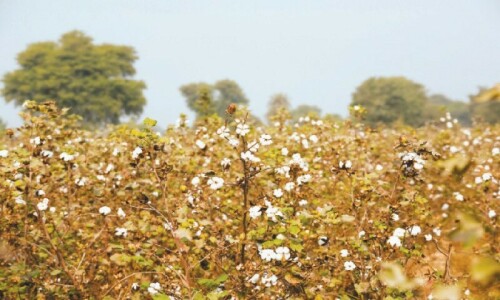
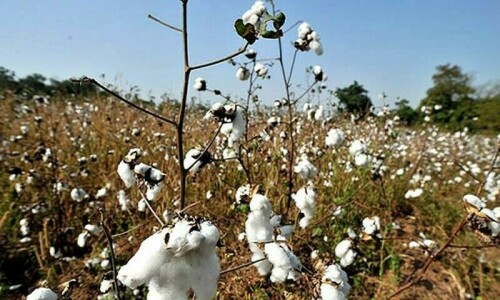
LAHORE: The cotton crop in Punjab is facing an onslaught from whiteflies, which is proving to be a nightmare for growers and agriculture department high-ups, as well who have so far been expecting a good harvest this year, mainly because of supportive weather.
The scale of the whitefly attack, which experts say has been caused by a sudden hike in temperatures across the cotton belt during the last couple of weeks, has raised fears of an extraordinary decrease in per acre crop yield that is contrary to the general expectation lint production target may not be achieved this year too.
The areas of Bahawalpur, Rajanpur and Dera Ghazi Khan are said to be among the worst-hit. A record cut in the arrival of cotton in markets and ginning factories is also being reported.
Help from army choppers, drones sought for pesticide spray
Alarmed by reports of the major pest attack, caretaker Chief Minister Mohsin Naqvi has dispatched Agriculture Secretary Iftikhar Sahoo and other top officials to the affected region, while help of army’s helicopters and drones has also been sought to spray pesticides.
A press release issued by the CM’s office claims that the army’s high command has agreed to the request to allocate its helicopters and drones for spraying the pest-affected fields.
Cotton Ginners Forum Chairman Ihsanul Haq said the attack began a couple of weeks ago and it is affecting the growth of the plant due to the blackening of the leaves. He feared that the attack will not only affect the overall domestic production of cotton, but the quality of the produce as well, which may lead to an increase in the import of cotton overburdening the precious foreign exchange reserves.
Mr Haq held the Meteorological Department responsible for weather-related damages the agriculture sector has been suffering from for the last many years, due to a lack of timely and accurate forecasts.
He says that owing to global warming, meteorological departments around the world have been upgraded a lot in the past few years so that timely and accurate weather forecasts of the rapidly changing climate can protect crops and the environment from maximum adverse effects.
But in Pakistan, he laments, the department’s equipment was not upgraded and instead it was converted into the Ministry of Climate Change, which could not have any positive effects on Pakistan’s agriculture.
The federal and provincial governments had declared 2023-24 as the cotton year and due to their efforts a record production of 10 million bales of cotton was expected this year.
The Federal Committee on Agriculture had fixed the domestic cotton production target at 12.7m bales this year, which seems to have been unlikely.
Published in Dawn, September 13th, 2023