India’s Modi calls for climate finance ahead of G20 meet


Indian Prime Minister Narendra Modi said on Thursday that leaders of the G20 summit he is chairing this weekend must support developing nations to tackle climate change with more cash and by sharing technology.
Against a backdrop of record-breaking temperatures and deadly heatwaves across the globe, climate scientists and activists have warned of dire consequences — particularly for developing countries — if leaders fail to forge a consensus.
Modi has pitched India as a self-styled leader of the “Global South”, a bridge between developed and developing countries.
“Many countries of the Global South are at various stages of development and climate action must be a complementary pursuit,” Modi wrote in an editorial carried by several Indian outlets as well as international dailies, including in Britain and Japan.
Globally, wealthy nations missed their pledge to provide, by 2020, $100 billion a year in climate finance to poorer nations, eroding trust that polluters will help vulnerable countries least responsible for warming to tackle the challenges of climate change.
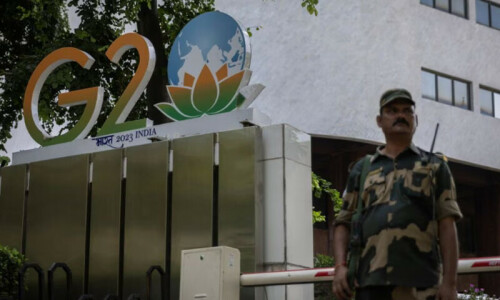
The Group of 20, which will meet in New Delhi this weekend, consists of 19 countries and the European Union, making up about 85 per cent of global GDP, and a similar amount of its carbon emissions.
“Ambitions for climate action must be matched with actions on climate finance and transfer of technology,” Modi added.
“We believe there is a need to move away from a purely restrictive attitude of what should not be done to a more constructive attitude focusing on what can be done to fight climate change.”
A G20 energy ministers’ meeting in July failed to agree on a roadmap to phase down the use of fossil fuels — or even mention coal, the dirty fuel that remains a key energy source for economies like India and China.
The two Asian nations are among the biggest global polluters but argue that historical contributors in the West need to take a much bigger responsibility for today’s global climate crisis.
The G20 energy and climate consensus push has also faced resistance from countries like Saudi Arabia and Russia, which fear that a transition away from fossil fuels would dent their economies.
“Due to the impact of climate change, ensuring food and nutritional security will be crucial,” Modi added, saying “boosting climate-smart agriculture” was one solution.
“Technology is transformative but it also needs to be made inclusive,” he said.
The G20 September 9-10 summit is the next major set of negotiations in a packed calendar of meetings crucial for action on global warming, culminating at the United Nations COP28 talks in the oil-rich United Arab Emirates starting in November.