The State Bank of Pakistan (SBP) on Wednesday announced its decision to introduce structural reforms in the exchange companies’ (ECs) sector in order to provide “better services to the general public and bring transparency and competitiveness” in the sector.
“This is expected to strengthen governance, internal controls, and compliance culture in the sector,” the central bank’s statement said, adding that banks engaged in foreign exchange operations were required to set up separate entities for these transactions.
The announcement comes after Chief of Army Staff (COAS) General Asim Munir assured the business community on Sunday of fostering transparency in dollar exchange and interbank rates.
“The money exchanges would be brought under the purview of taxation, fostering transparency in dollar exchange and interbank rates,” the COAS said while talking to the business community at a meeting held at the Lahore Corps headquarters.
Meanwhile, reports have also surfaced of authorities planning a clampdown on hard currency hoarders and smugglers.
The SBP’s measure also seems to be a step towards fulfilling the International Monetary Fund’s (IMF) condition of shrinking the gap between the rupee’s interbank and open market rate.
Under a $3 billion loan programme agreed in July to avert a default on Pakistan’s sovereign debt, the IMF told authorities to limit the premium between the local rupee’s interbank and open market rates to 1.25 per cent over any given five business days.
The currency has fallen sharply this year, including a 5pc decline to record lows since August 15, when a caretaker government took office.
Experts and stakeholders have blamed the powerful grip of the grey market and the IMF’s “significant interference” in the country’s banking and currency sectors for the rupee’s freefall.
Reforms plan
The SBP said in its statement today that under the revised regulations, leading banks actively engaged in foreign exchange business would have to establish “wholly owned exchange companies to cater to the legitimate foreign exchange needs of the general public”.
Furthermore, various types of existing exchange companies and their franchisees would have to be “consolidated and transformed into a single category of exchange companies with a well-defined mandate”, the statement said.
In addition, the minimum capital requirement for exchange companies was being increased from Rs200 million to Rs500m, it added.
The SBP also outlined a transition process for exchange companies, their franchises, and category B exchange companies (ECs-B) to become mainstream ECs.
It said “ECs-B may graduate to exchange companies after meeting all regulatory requirements, within three months; otherwise, their license would be cancelled.”
“Franchisees of exchange companies may either merge or sell operations to the concerned franchiser company, within three months after meeting all regulatory requirements.
“For the above purpose, the ECs-B and franchises of exchange companies will submit their conversion plan and seek an NOC (no-objection certificate) from the SBP within one month,” the statement said.
Analysts’ views
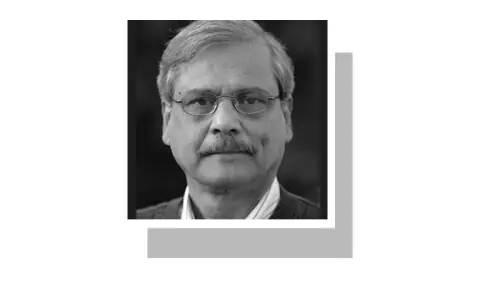
After the plan was announced, Deputy Executive Director (res) at Sustainable Development Policy Institute Sajid Amin Javed pointed out the need for more clarity.
“The SBP has licensed banks to open foreign exchange companies. Countries do. But, let’s see how the SBP defines ‘legitimate foreign exchange needs’ and ‘well-defined mandate’ of companies.
“It will indicate the purpose and impact of reform. Clear, written definition is needed,” he wrote on X, formerly Twitter.
On the other hand, former chairman of the Federal Board of Revenue (FBR) Shabbar Zaidi termed the regularisation of exchange companies an “excellent step”.
“This animal has to be merged with banks. It’s better late than never,” he wrote on X, adding that the government should now take steps to end the physical movement of dollars.
He said the movement of dollars should only be allowed for “travel on passports or bank account” and anybody carrying the foreign currency otherwise should be jailed.
Zafar Paracha’s letter
Separately, General Secretary of the Exchange Companies Association of Pakistan (ECAP) Zafar Paracha told Dawn.com that he had sent a request to the central bank’s foreign exchange director, highlighting the arrival of a policeman at his exchange company’s branch in Gujranwala “without any authority letter”.
“It is to bring to notice that a policeman came to the branches of exchange companies, Gujranwala and said that under the instructions of Mr Hashim Gujar, SP Gujranwala Special Branch, I have to sit in the branch and check the dollar sale and customers during the whole day,” the text of the request that Paracha shared with Dawn.com read.
Additional input from Reuters