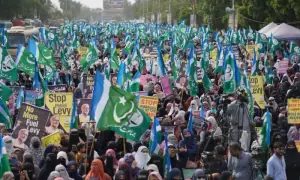
ISLAMABAD: As a countrywide wheel-jam and shutter-down strike is being observed today (Saturday) on inflated electricity bills, Caretaker Prime Minister Anwaarul Haq Kakar insisted that it was being raised by some political parties as a “tool” in their election campaigns.
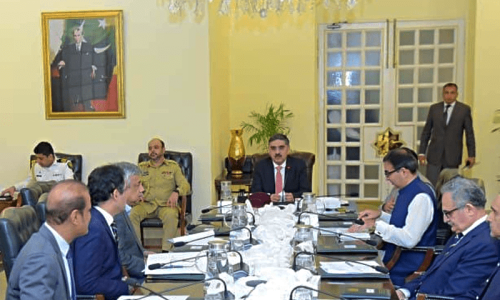
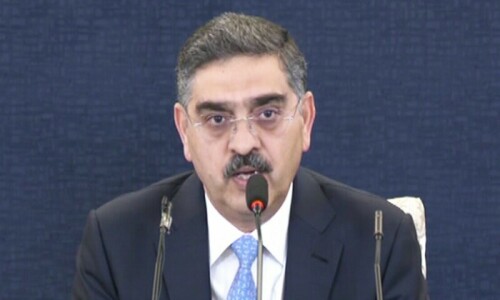
“It is not a very serious issue, but political parties are in election mode and using it as a social cause,” the interim prime minister told senior journalists and news anchors on Friday.
“I realise their position. If I were to contest the election, I would have followed the same as well,” he added.
On the other hand, the premier’s remarks that consumers “have to pay the bills” have further frustrated the people who have been on the streets and burning inflated bills. It is, therefore, expected that a successful strike will be observed today.
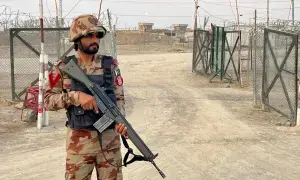
Responding to a question on the issue of using free electricity, Mr Kakar said the government officially contacted the military and it claimed that the armed forces — Pakistan Army, Navy and Air Force — were not using a single free unit of electricity and their bills were paid from the allocated financial budget.
Expects SIFC to attract up to $70bn in five years
However, Mr Kakar said that Wapda employees were using free electricity units and their usage would be rationalised, especially of the higher-grade officers, some of whom were getting huge amount of free electricity.
Foreign investment
He said an estimated foreign investment of $60 billion to $70 billion was expected in the next three to five years under the government’s new initiative of Special Investment Facilitation Council (SIFC). He said the interim government had also received pledges and promises of another similar amount of investment.
“Now, we have to design and submit our projects, as there is a huge appetite to invest in the country,” he claimed.
The SIFC was formed in June this year to frame economic policies to “ensure policy predictability, continuity and effective implementation to revive the economy”.
Citing the example of the $700bn worth of Reko Diq gold and copper reserves, the prime minister said the country had huge potential for natural resources that would change the fate of the people of Pakistan.
He said the SIFC was the whole of the government project and there was no hidden in it. “This is a transparent intervention that has already been initiated and has the overall potential of $5 trillion to $6 trillion,” he added.
The prime minister highlighted that Pakistan had huge land that could be used for agriculture and could serve half of the Asia population’s food requirements. He also claimed that the country had enough water to irrigate the barren land across the country.
Likewise, he said IT, tourism and defence production also had enormous potential that would be tapped for the socio-economic development of the country.
Diplomats briefed
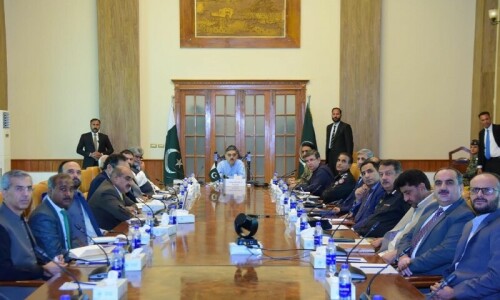
Later, diplomatic missions were given a detailed briefing on investment options so that they could “encourage their countries” to profit from Pakistan’s rich resources in a bid to attract foreign investment to the country.
According to the Foreign Office, the participating diplomatic missions were requested to brief and encourage their countries to profit from the promise of Pakistan being a resource-rich country.
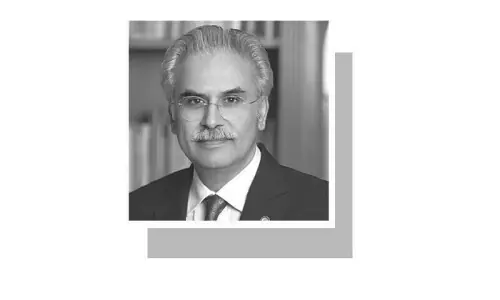
Special Assistant to Prime Minister on Government Effectiveness Dr Jehanzeb Khan made a “detailed presentation informing the diplomatic corps on the establishment and various aspects of the council”.He particularly highlighted investment opportunities in Pakistan in four key areas: information technology, agriculture, energy and mining.
He said the SIFC had been recently constituted to “serve as a one-window platform to fast-track decision-making and promote as well as facilitate Foreign Direct Investment in the country”.
Plagued by economic challenges amid an “inordinate” delay in the revival of the IMF programme, civilian and military leaders devised an “economic revival plan” in June to capitalise on “untapped potential in key sectors” and attract FDI.
Published in Dawn, September 2nd, 2023
Correction: An earlier version of the article erroneously mentioned PM Kakar terming inflated bills as a ‘non-issue’. Caretaker Information Minister Murtaza Solangi clarified that the prime minister ruled out any anarchy but did not dismiss the matter as a “non-issue”.