Tens of thousands flee western Canada wildfires


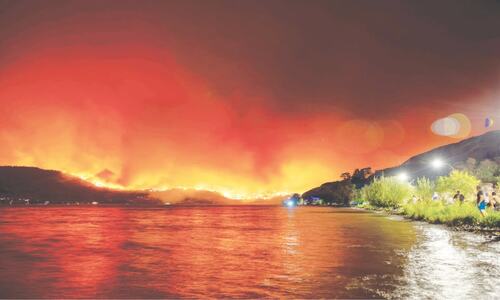
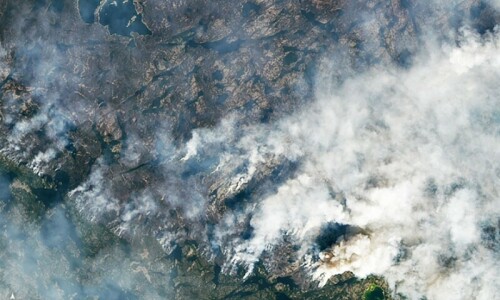
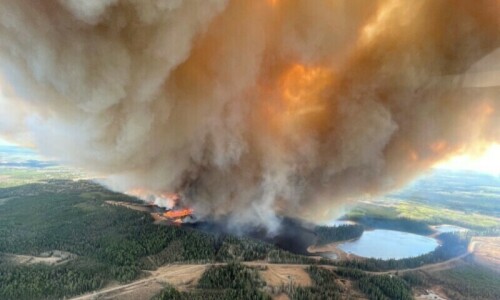
KELOWNA: Residents of western Canada scrambled to evacuate on Saturday as raging wildfires encroached on two metropolitan areas — separate blazes that have sent tens of thousands fleeing over the course of just days.
The devastating fires in British Columbia and the Northwest Territories are just the latest in a summer of dramatic wildfires across the country that have left millions of acres scorched.
According to estimates, 19,000 people were evacuated from Yellowknife, the Northwest Territories’ capital, over 48 hours, its environment minister Shane Thompson said.
The city, home to some 20,000, was largely a ghost town following the largest ever evacuation from the region.
More than 2,000 kilometres south in British Columbia, fire also bore down on Kelowna, a city of 150,000 people in the Okanagan Valley. Blazes have already destroyed several properties in West Kelowna, separated by Okanagan Lake from its larger, eponymous neighbour.
Among them is the Lake Okanagan Resort, according to local media, which is known for having hosted high-profile politicians such as British prime minister Margaret Thatcher.
Overall, the number of people under evacuation order in British Columbia was 15,000, Emergency Management Minister Bowinn Ma said, according to Canadian media.
Thousands in the area were ordered evacuated or told to be ready to leave at a moment’s notice, while those on the University of British Columbia’s Okanagan campus were ordered on Friday to leave “immediately.”
‘Sad and depressed’
Officials described firefighters in the Kelowna area as being forced to pull back, with some becoming trapped behind lines while making “heroic efforts” to rescue area residents.
“We fought hard last night to protect our community,” local fire chief Jason Brolund told a briefing on Friday.
The blazes have caused “terrible loss,” Prime Minister Justin Trudeau told reporters after meeting evacuees from Yellowknife as they arrived in Edmonton, Alberta, with no idea when they may return home.
Of the 19,000 who fled Yellowknife, “over 15,000 traveled out by road and 3,800 have been airlifted, with approximately 1,000 essential staff remaining in the city and surrounding area,” environmental minister Thompson posted on X, the platform formerly known as Twitter.
Those crews were remaining to erect defenses from the flames, while water bombers have been seen flying low over the city, with the Canadian military also helping out.
Published in Dawn, August 20th, 2023