0
0

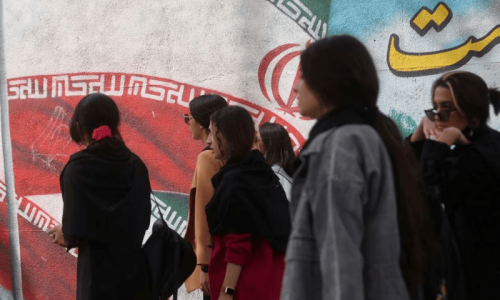
Iranian police on Sunday relaunched patrols to catch the increasing number of women leaving their hair uncovered in public in defiance of a strict dress code, state media reported.
The report comes exactly 10 months after the September 16 death in custody of Mahsa Amini, 22, triggered nationwide protests and saw morality police largely disappear from the streets, while more and more women flouted the law.
Amini, an Iranian-Kurd, had been arrested by morality police for allegedly violating the dress code, which requires women to cover their head and neck in public.
While the morality police withdrew, authorities have taken other measures to enforce the law. These included the closure of businesses whose staff do not conform to the rules, and installing cameras in public places to track down offenders.
But beginning on Sunday, the traditional approach is being tried again, state media said.
“The police will launch car and foot patrols to warn, take legal measures, and refer to the judiciary those who disobey police orders and disregard consequences of dressing against the norms,” the official IRNA news agency quoted police spokesman Saeed Montazer Almehdi as saying.
Online images have shown female police officers, clad in all-black chadors, berating and arresting women whose heads were uncovered.
AFP could not independently verify the authenticity of the images.
The dress code has been in place since the aftermath of the Islamic Revolution of 1979. Offenders face fines or prison terms of up to two months.
But Iran’s reformist newspaper Shargh reported on Sunday that four women have received additional punishment including attending “psychological classes”, and driving bans.
During the months of protest, which Tehran generally labelled as foreign-instigated “riots”, thousands of Iranians were arrested and hundreds killed including dozens of security personnel.
Iran’s conservatives, who dominate the country’s parliament and leadership, have passionately defended the dress code but, with many Iranians demanding change, in May the judiciary and the government proposed a “Support for the Culture of Hijab and Chastity” bill, which sparked heated debate within the country.
The text proposes increased fines for “any person removing their veil in public places or on the internet” but withdraws the threat of a prison sentence.
Within Iran’s leadership “there is no consensus on the hijab”, as some favour repression, while others “believe that other means must be tried”, sociologist Abbas Abdi has said.
The United States, Britain and the European Union have imposed several rounds of sanctions on Iran over its response to the protest movement.