ECC allows petroleum imports on suppliers’ credit


ISLAMABAD: The government on Tuesday allowed traders to import crude oil and petroleum products on suppliers’ credit and approved policy guidelines on foreign supplier’s accounts through customs-bonded storage facilities but the decision immediately set the local oil industry crying.
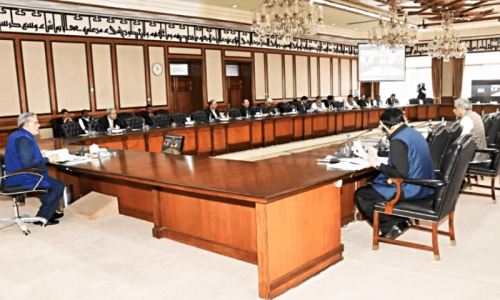
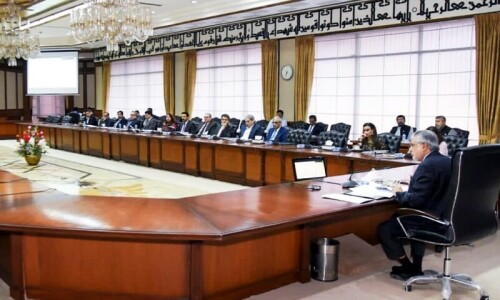
The decision was taken at a meeting of the Economic Coordination Committee (ECC) of the Cabinet, presided over by Finance Minister Ishaq Dar, which also approved more supplementary grants of Rs4.01bn including Rs200 million to the Auditor General of Pakistan and Rs3.815bn to the Ministry of Interior for additional ration bills of Rs2.99bn of Frontier Corp (KP-North) and Rs825m to FC KP-South.
Under the guidelines for bonded oil storages proposed by the Petroleum Division, the move would help address oil supply challenges including those relating to foreign exchange and create an additional facility without any cost to the government as the traders would arrange imports on supplier’s credit compared to the letters of credit based imports by major domestic companies.
The new policy provides for foreign suppliers to maintain crude oil and product inventories in bulk within their own Customs Public Bonded Warehouses near Pakistani ports and would function without payment of foreign exchange until the products are sold in the local market or re-exported. There would be no restriction on the foreign supplier to register a local subsidiary — a decision taken by Mr Dar — against some suggestions that firms should be based in Pakistan.
OCAC warns move will threaten local production and supply chain integrity
Mr Dar also overruled the requirement for setting up new storages before starting the bonded warehouses as he believed it would consume a lot of time and discourage oil flows. Also, he was told that most of the bonded warehouses and domestic storages of local companies mostly remained 40-50pc empty.
But the decision was immediately rejected by the Oil Companies Advisory Council (OCAC) — an association of more than three dozen local OMCs and refineries.
“This scheme was presented and promoted by a certain lobby with vested interests in the past too but was opposed by local refineries and oil marketing companies (OMCs) including public sector companies being based on wrong premises and not beneficial for the country”, said the OCAC, adding that the local industry had on several occasions opposed this proposal but surprisingly the ECC approved it without taking into consideration views of all stakeholders.
The “implementation of the approved policy will have serious ramifications for the oil industry including a threat to local production and supply chain integrity”, it warned and expressed concerns that the government had also recently approved part of the refining policy offering incentives to foreign investment in new green field refineries but put on the back burner incentives to existing local refineries for their expansion and upgradation which envisaged investment of $4.3bn.
“Prioritising instead policy for foreign investment in bonded storages and that too without taking into account concerns and reservations of downstream petroleum sector raises serious questions,” it said.
The OCAC said the new arrangement would adversely affect local production and may lead to the exploitation of the local refineries, which are already struggling to dispose of their petrol and diesel volumes due to multiple reasons.
Consequently, this will have massive economic effects not only on the oil industry but also on the overall economy.
Furthermore, the planning of imports and local supplies will be compromised as well and the presence of international players with their interests above our national interest may lead to the collapse of the already delicately balanced product supply chain of the country.
Moreover, the benefit of cheaper products may not cascade to the end customers as the importer would remain the beneficiary of such imports but the move would lead to port congestion - existing importers are already facing setbacks due to long waits, especially during agriculture season.
This arrangement would add to the woes of the existing importers as import and export by Foreign Suppliers will have to be accommodated using the current port infrastructure; any such arrangement is not feasible without the development of additional jetties and may add to port congestion.
Published in Dawn, June 28th, 2023