ISLAMABAD: Day-wage labourers, health workers and senior citizens residing in the hottest cities of Pakistan, are most vulnerable to the horrors of heatwaves hitting the country, according to an Amnesty International report.
The report: ‘A Burning Emergency: Extreme heat and the right to health in Pakistan’. released on World Environment Day, examines the impacts of extreme heat in Pakistan on people’s lives and right to health and livelihoods.
The report stated that daily wagers — who make up 71.7pc of the labour force in Pakistan — have no social and economic protection, and hence have no choice but to continue working in extreme weather conditions, despite health guidelines to stay indoors during periods of extreme heat.
“We have to rethink taking [a] break. If we take a break there is no daily wage. Because of poverty, we have to work no matter the weather,” a male truck driver in Lahore told Amnesty International.
Living in informal settlements is a nightmare because of direct exposure to heat which makes old people vulnerable to chronic diseases related to cardiovascular, respiratory, cerebrovascular disease and diabetes, the report said.
Amnesty report highlights plight of labourers who cannot afford to sit idle during extreme weather conditions
“I don’t go out because it is so hot. I go and spend the day in someone’s house. I sit there under the ceiling fan all day. I get intense itching [because of the heat]. And that leads to boils. [The heat] effects my diabetes. My blood sugar levels fall low. So I keep on sitting under the fan. I don’t go anywhere,” a 70-year-old woman told Amnesty.
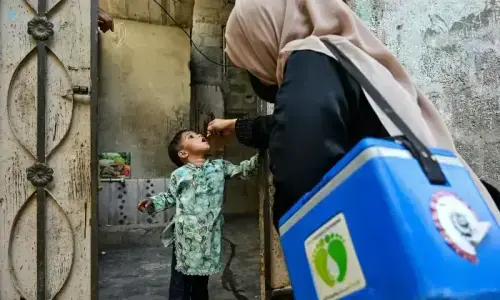
Health workers interviewed in Jacobabad and Lahore reported seeing a significant increase in heatstroke, drowsiness, abnormal breathing patterns, burning sensations in the stomach, dizziness, fever, body pain, eye infections, and headaches during periods of extreme heat.
In Pakistan, more than 40 million people do not have access to electricity. Others have erratic and irregular supplies. People living in poverty do not have access to, or are unable to afford electricity for fans or air conditioning units and neither can they afford to buy solar panels, the report stated.
The report is based on in-person interviews with 45 people experiencing adverse impacts of extreme heat during the summer months of 2021 and 2022 in Jacobabad and Lahore, two of the hottest cities in Pakistan. Jacobabad is one of the hottest places on the planet. Its highest recorded temperature was 52°C in June 2021.
Call to action
The report sets out a comprehensive list of recommendations for the government in Pakistan and the international community. The measures include calling for the Pakistani authorities to conduct a ‘needs assessment’ in the context of heat waves, focusing on and with the participation of the most marginalised people, preparing and implementing human rights compliant heat action plans, and providing effective social protection in order to support people in coping with heat waves.
These actions require significant financial resources, and the international community must come together to ensure the availability of these, the report suggested.
Debt relief from payments currently occupying significant amounts of government revenues and expenditure can be one avenue of financing, the report emphasised.
“Pakistan is on the frontline of the climate crisis. Climate injustice is starkly visible, with its people facing disproportionately severe consequences, often life threatening, despite their small contribution to climate change. Tackling a climate crisis of this scale requires global attention and action. Wealthier countries must make no mistake about the important role they play,” said Dinushika Dissanayake, Amnesty International’s Deputy Regional Director in South Asia
“Without further delay, wealthier countries must demonstrate a decisive commitment to reduce emissions, rapidly phase out fossil fuels and provide funds to support people to adapt and quickly operationalise the Loss and Damage fund established at COP27,” he added.
Published in Dawn, June 6th, 2023