PAKISTAN is an important player in the digital world. It is heartening to note that, according to a 2021 ILO report related to online work, Pakistan ranked as the world’s third largest supplier of online labour, and is preceded only by Bangladesh and India. Thanks to the growth of the IT sector, it is maintaining its position as one of the top destinations for internet communications and technology outsourcing.
Not only are we a big market of freelancers but the internet is also increasingly becoming an integral part of life, with people in both the urban and rural areas dependent on online services and social media platforms for work, healthcare, education, etc. Indeed, with such dependence on the digital world, it makes no sense whatsoever to close or disrupt internet services for even a day, let alone several days.
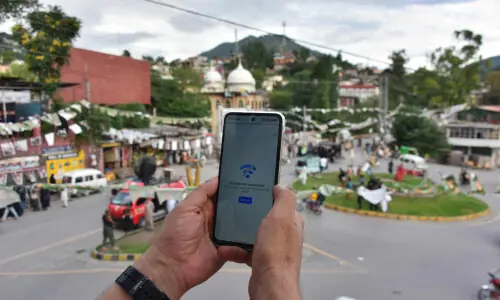
The recent move by the government of Pakistan to shut down internet services in the country, as a result of the mayhem unleashed by miscreants, has shaken the trust of local and foreign businessmen looking to invest or work here. It was a thoughtless and old-fashioned move on the part of the government, which had a crippling impact on millions of individuals for whom various digital services are a major source of livelihood.
Thanks to an inadequate wired infrastructure, more than 125 million people are using 3G and 4G services provided by telecom operators. It is a problem when these services are shut down even temporarily.
In a recent report, Reuters pointed out that “point-of-sale transactions routed through Pakistan’s main digital payment systems fell by around 50 per cent”, a day after riots erupted in the aftermath of former prime minister Imran Khan’s arrest, leading the government to close mobile internet services. This arbitrary action not only caused loss of earnings to many who are a part of the digital gig economy but also to the government itself, which suffered a huge loss of revenue that these services bring if they are allowed to operate without interruptions.
Disrupting internet services is not an option.
Internet services during this period were patchy at best. Meanwhile, the government also ordered the closure of numerous popular social media sites. Perhaps, it did not realise that in this world of advanced technology, it is near impossible to cut off access to social media sites as software and mobile apps are capable of getting past firewalls and reaching the desired website or social media platform.
That is precisely what happened: even though social media platforms were blocked, many were still able to access blocked websites through virtual private networks — VPN — that help users bypass firewalls by changing their IP location.
It is because of the use of VPN that some of the Twitter trends created in Pakistan were shown trending in the Netherlands.
However, thanks to internet disruptions, the financial loss hit many. Those working through freelancing websites were making all-out efforts to deliver their orders on time but unfortunately, their efforts were in vain. The closure ordered by the government created mistrust.
The well-known freelancing site Fiverr downgraded Pakistan’s ranking, warning its customers that they could face delays in delivery if they gave orders to freelancers in this country.
Pakistan is a country of youngsters: 60pc of its population is below the age of 30 — and this cohort is increasing because of a high population growth rate. This means that more and more youngsters will enter the job market in the years ahead.
In this scenario, governments at both the federal and provincial level should partner with experts and launch extensive programmes to teach people about safe and healthy use of the internet. In fact, the use of the internet should be made part of the curriculum.
Pakistan’s youth represents its human capital. They should be encouraged and provided more opportunities to enhance their earning through digital methods.
The success of digital entrepreneurs can help earn foreign exchange for the country and they may set an example for their own communities, prompting more people to work online.
The global population survived economically during the Covid-19 pandemic because of access to advanced digital services connecting them nationally and internationally.
This episode should be a lesson to the government (and future political dispensations) that the suspension of internet services is not an option. It damages Pakistan and its people financially and also hurts Pakistan’s image. Instead, the authorities should do all they can to promote the use of the internet so that the benefits of online economy can reach people across the country.
The writer is a freelance contributor.
Twitter: @KhurramZiaKhan
Published in Dawn, May 22nd, 2023