0
0

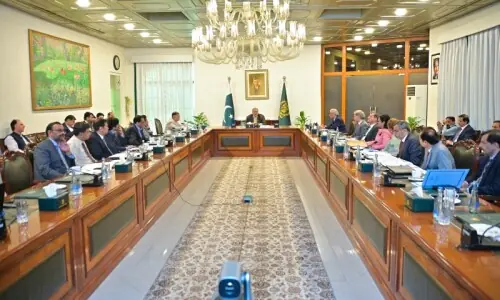
VIENNA, Jan 22: Europe and the United States are struggling to get Russia and China on board to crack down on Iran at a UN meeting next month over a nuclear programme the West fears hides secret atomic weapons work, diplomats told AFP on Sunday. While some move by the International Atomic Energy Agency seems certain when the UN watchdog agency meets here on Feb 2, it remains unclear how much of a deadline it will be for Iran.
A diplomat close to the IAEA said key Iranian trade partner Russia wanted to split the action into two parts, “with a nominal referral in February but giving Iran one month to deliver on demands to suspend nuclear fuel work and to cooperate” with IAEA inspections.
The IAEA is to hold another meeting, a regularly scheduled one, on March 6.
A Western diplomat said European Union negotiators Britain, France and Germany as well as the United States “rejected this idea outright,” even if other diplomats said a compromise in the Russian direction was possible.
“The United States doesn’t want to wait anymore,” said a non-aligned diplomat.
The EU negotiating trio and the United States, “are trying to sell” China and Russia on a tough resolution at the IAEA board of governors meeting to send Iran before the Security Council for possible sanctions, said a second Western diplomat, who like others interviewed asked not to be named due to the sensitivity of the issue.
China, a major recipient of Iranian oil, and Russia want to give diplomacy more time in a crisis which escalated when Tehran earlier this month announced it was resuming nuclear fuel work that can also make atom bomb material.
“The Russians need cooperation with Iran to deal with their soft underbelly,” non-proliferation expert Gary Samore said about the Muslim states of central Asia. IAEA director Mohamed ElBardei has already given Iran until March to comply with a report on its cooperation that he is to file at the board meeting that month, diplomats said.
“A real problem the United States and the Europeans face is that it is hard for them to explain why referral to the Security Council is going to be helpful.
“No one thinks political pressure and modest sanctions are going to be very effective,” said Samore, a former White House arms control expert.
Russia, which has a billion dollar contract to build Iran’s first nuclear reactor, and China each have vetoes on the Security Council and are worried about the crisis escalating.
The non-aligned diplomat said there was already fall-out as countries like India, a major client for Iranian oil and a big player on the IAEA’s 35-nation board, are feeling the pinch from high prices for crude.—AFP