KARACHI: The transmission and distribution systems require investment of $8 billion by 2025-26 as the country’s power sector moves to the Competitive Trading Bilateral Contract Market (CTBCM) from the existing single-buyer model.
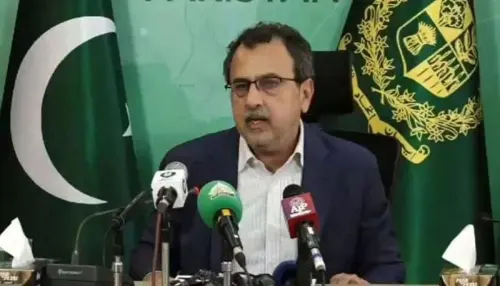
Speaking at a seminar organised on Tuesday by the CFA Society Pakistan on the future of the electrical grid, National Transmission and Despatch Company Ltd’s former managing director Fiaz Chaudhry said nationwide blackouts — like the one on January 23 — will become more frequent without the $8bn investment in the two major segments of the power sector.
A work in progress, CTBCM will provide the electricity buyers of one megawatt and above with the option to purchase power on a competitive basis from any producer of their choice.
The exchange-like CTBCM will connect sellers, buyers and traders of energy, capacity and ancillary services on a single platform, letting bulk consumers obtain electricity from any producer across the country at an additional wheeling charge of about Rs2 per unit.
CTBCM will, thus, transform the traditional, vertically integrated and uncompetitive power utility into a competitive one. Only the operation of electric wires will stay monopolistic, Mr Chaudhry said.
Transmission and distribution networks built for the one-way flow will become dynamic with the two-way flow of renewable energy in the presence of microgrids and smart metres.
While the smart grid will make the movement of electricity measured and controlled more frequently at numerous junctions, it’ll also pose challenges in terms of a high initial setup cost, inadequate information about consumers, cybersecurity threats and a general lack of the regulatory framework, Mr Chaudhry added.
Similarly, the distribution sector will also have to evolve to accommodate distributed energy resources, greater involvement from customers and growth in grid-edge technologies, which come into play at the end of electrical grids.
He said there’s a “very high-power flow” from base plants (nuclear and coal) in the South region to Punjab, which is constraining the south-centre interface. The distribution load in the North region was 81 per cent while that of the South region was only 19pc in 2021-22, said Mr Chaudhry.
Responding to a question, he said the solution to the problem of mounting capacity payments should mainly be found on the demand side i.e. only a growing industrial sector can adequately consume and pay for all the extra electricity in the generation system and save the government from avoidable charges on idle capacity.
Mr Chaudhry said transmission and distribution segments should be open to the private sector — something that’s mostly missing from the current scheme of things. “The government lacks capacity and resources to implement these projects,” he said.
Published in Dawn, March 8th, 2023