0
0

ISLAMABAD: The number of smokers in Pakistan has reached 31 million and 466 people die daily in the country due to tobacco-induced diseases such as cancer, diabetes, heart disease, stroke and chronic lung diseases.To overcome this loss of life and healthcare resources, the Tobacco Health Levy Bill which has been pending since 2019 must be approved immediately.
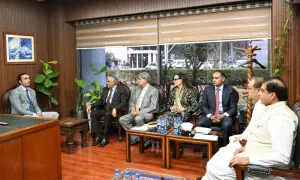
Former technical head of the Health Ministry’s Tobacco Control Cell Dr Ziauddin Islam said this in a dialogue organised by Society for Protection of Rights of the Child (Sparc) attended by other policy makers.
He said that around 1,200 Pakistani children between the ages of six to 15 years start smoking every day.Legislators including Senator Falak Naz, Uzma Riaz Jadoon, Saleh Mohammad and others attended this event and supported the notion of increasing tobacco taxation and implementing other measures.
Country head of Campaign for Tobacco Free Kids (CTFK) Malik Imran Ahmed said that due to cheap and easy affordability of tobacco products, the economic cost of smoking in Pakistan was Rs615.07 billion which was equal to 1.6pc of Pakistan’s gross domestic product (GDP) but the revenue generated from the tobacco industry was only 20pc of the total cost.
“Evidence suggests that higher cigarette taxes deter smoking initiation, reduce cigarette consumption, and even lead smokers to quit. Last year, Pakistan raised tobacco taxes for the first time since 2019 however we are still far off from by the 30pc increase suggested by World Health Organisation (WHO),” he said.
Sophia Mansoori, programme coordinator at CTFK, said: “If the traditional forms weren’t enough, the tobacco industry has launched now novel products (nicotine pouches, e-cigarettes, and heated tobacco devices) which are openly sold to youth through point-of-sales advertising and extensive social media campaigns. There is a need to ban all forms of novel products immediately before our youth becomes addicted to them.”
The policymakers unanimously agreed with the closing remarks of Khalil Ahmed Dogar, Sparc’s programme manager.
Khalil mentioned that in 2022 Pakistani children were hit badly by climate change, viral diseases, and poor nutrition due to inflation.
“We can’t afford to put their health in any further risk. There is a need for all relevant duty barriers to work in tandem and support implementation of a sustainable tobacco control policy which covers implementation of the Tobacco Health Levy, increase in taxation and graphical health warning, ban in novel tobacco products, and zero sale of tobacco products near educational institutions,” he said.
Published in Dawn, January 20th, 2023