18
18

UNITED NATIONS: Pakistan on Thursday abstained from voting on a UN General Assembly resolution that expressed deep concern over the volatility in Afghanistan since the Taliban took over the conflict-torn country last year, describing its text as “unbalanced and unrealistic”.
The UNGA noted with concern persistent violence and presence of terrorist groups in Afghanistan as well as abuse of human rights, including those of women, girls and minorities.
The 193-member assembly passed the resolution by 116 votes in favour to none against, with 10 abstentions. China, Russia, Belarus, Burundi, North Korea, Ethiopia, Guinea, Nicaragua and Zimbabwe were the other abstainers.
Entitled “The situation in Afghanistan”, the resolution reiterated its unwavering commitment to international humanitarian law and the human rights of all Afghans.
General Assembly concerned over volatility in Afghanistan; Pakistan’s representative calls text ‘unbalanced’
The UNGA also expressed deep concern about the “growing repression of fundamental freedoms” and strongly emphasised the need to investigate allegations of human rights abuses in the country.
The assembly reiterated its serious concern about the continuing violence and the presence of terrorist groups such as Al Qaeda and the militant Islamic State group, also known as Daesh.
It noted that millions of people face emergency level of food insecurity and acknowledged that women and children are disproportionally affected by the humanitarian crisis.
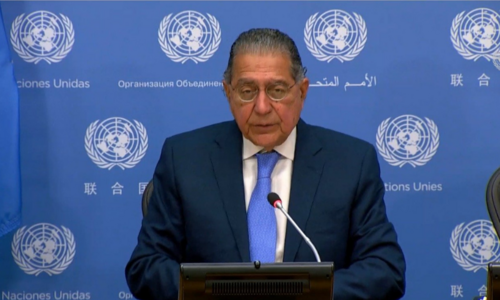
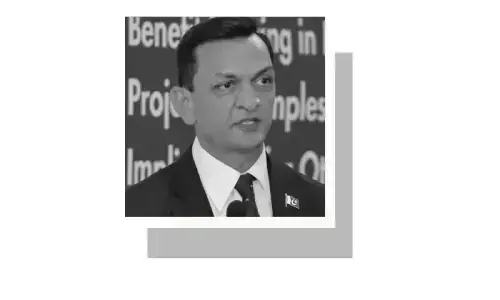
Ambassador Aamir Khan, Pakistan’s deputy permanent representative to the UN, said he had abstained because the resolution was unbalanced and, in several respects, unrealistic. He pointed out that it did not acknowledge the de facto new government in Afghanistan.
He said the resolution did not delineate any process to promote normalisation in Afghanistan through a process of engagement with the de facto government, adding there was no commitment to unfreeze Kabul’s national reserves, and no commitment to help the country’s economic recovery beyond humanitarian assistance.
“In particular,” Mr Khan said, “Pakistan is disappointed that one delegation was allowed to block references to the specific mention of terrorist organisations, including the TTP [the banned Tehreek-i-Taliban Pakistan], as well as references to the role and contributions of the OIC [Organisation of Islamic Cooperation] to peace and stability in Afghanistan”. He was obviously referring to India’s role during the consultation process.
Published in Dawn, November 12th, 2022