KARACHI: Despite being a nuclear state, Pakistan lags far behind in all key indicators of heath sector even in South Asia.
“We have failed to provide potable drinking water to a majority of our population as there is no political will at the federal, provincial and local tiers of the government to work for the common man.” This was stated by senior health expert and civil society activist Prof Tipu Sultan during a lecture titled ‘Health for all’ held at Karachi University (KU) on Thursday.
Part of the Sheikh Mutahir Ahmed Memorial Lecture Series, the event was organised by KU department of international relations.
“It is shameful for us that even Sri Lanka is far ahead in all major health indicators. They have improved their maternal health facilities, reduced infant mortality, and prevented quackery in the healthcare system,” Dr Sultan noted.
Pakistan lags far behind in all major health indicators, KU seminar told
According to him, governments in the developed and developing world have designed sophisticated tertiary healthcare facilities and taken ownership, responsibility, and set a direction for the system.
“But, unfortunately, the case is different in Pakistan. Health is not the top priority of our political elite and it’s reflected in the dismal state of health and the meagre allocation the sector gets every year. Corruption has been institutionalised in the health department and regulatory bodies are there to create problems for qualified doctors and patients.”
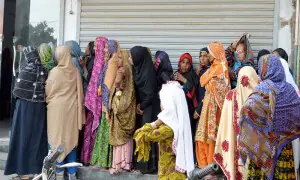
The situation, he told the audience, had created a mafia in the name of medical professionals who were ready to sacrifice the dignity and sanctity of the profession for monetary gain. There were long queues of patients outside all major tertiary healthcare hospitals and taluka and district healthcare facilities were without surgical facilities and doctors.
“We, as a society, nation and state have failed to provide fundamental healthcare facilities to our masses and materialise our constitutional duty, fulfil international commitments and achieve sustainable development goals.”
He outlined policy interventions to improve the healthcare system in Sindh as well as in Pakistan.
While highlighting the need for a strong political will for a positive change, he advised that a fresh debate and discourse on the health sector was needed.
“There is a dire need to establish Jinnah hospitals like tertiary healthcare facilities in all seven districts of Karachi, private hospitals and healthcare facilities are good initiatives, but the onus and responsibility to provide fundamental healthcare lie in the hands of the government.”
Earlier, in her opening remarks, chairperson of the international relations department Prof Shaista Tabassum emphasised the need for ensuring provision of fundamental rights to the masses including basic health facilities.
A healthy population was a guarantee for economic and political stability, she said.
Published in Dawn, November 4th, 2022