COLOMBO: Bankrupt Sri Lanka’s economy shrank 8.4 per cent year-on-year in the second quarter, official data showed on Thursday, as the island nation’s unprecedented financial crisis reached its peak.
Months of acute food, fuel and medicine shortages, extended blackouts and runaway inflation have plagued the country after it ran out of dollars to finance even the most essential imports.
Sri Lanka has defaulted on its $51 billion foreign debt and in July angry protesters stormed the home of then-president Gotabaya Rajapaksa, with the leader subsequently fleeing the island before resigning.
Industrial output fell by 10pc in the June quarter while the agricultural sector contracted by 8.4pc, according to Sri Lanka’s statistics department.
Thursday’s figures follow a 1.6pc contraction in the first quarter with the economy already weakened in 2021 by the impact of the Covid-19 pandemic.
Sri Lanka’s central bank expects the country’s economy to shrink by eight percent this year, with inflation running at over 64 percent and the rupee losing nearly half of its value against the dollar since January.
Shortages pummelled the economy after the government ran out of foreign currency to finance essential imports.
The pandemic was a hammer-blow to the island’s tourism industry and dried up remittances from Sri Lankans working abroad -- both key foreign exchange earners.
Rajapaksa’s government was accused of introducing unsustainable tax cuts that drove up government debt and exacerbated the country’s economic woes.
Chinese debt, accounting for about 10pc of Sri Lanka’s external borrowings, is also partly blamed for the crisis.
The latest data was released on the same day Sri Lanka opened its white elephant Lotus Tower, a $113-million observation deck built with Chinese loans, to the public.
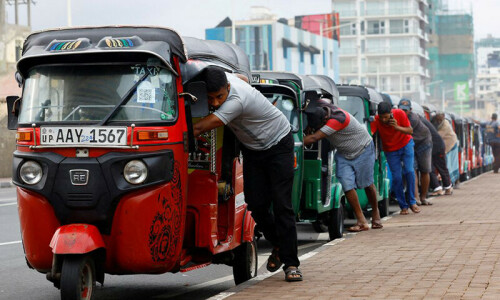
At the peak of Sri Lanka’s petrol supply problems, motorists had to wait for weeks to top up, although strict fuel rationing has since shortened queues.
The UN warned in August that at least half of Sri Lanka’s child population was in urgent need of support to prevent malnutrition.
Published in Dawn, September 16th, 2022