'Impossible situation' for Sri Lankans struggling for petrol


Doctors and bankers were among the hundreds of Sri Lankans who marched on Wednesday to demand that the government resolve a severe fuel shortage at the heart of the worst economic crisis in decades or step down.
Weeks of street demonstrations against cascading woes such as power cuts and shortages of food and medicine brought a change in government last month after nine people were killed and about 300 injured in protests.
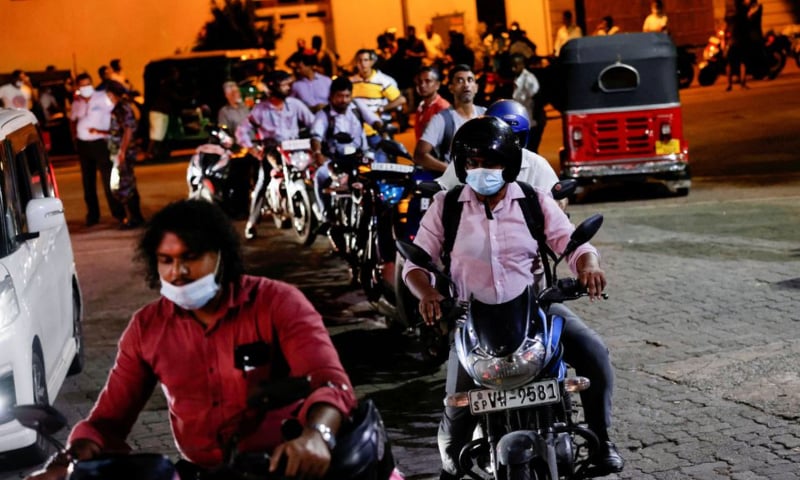
Left with just enough fuel for about a week, the government restricted supplies on Tuesday to essential services, such as trains, buses and the health sector, for two weeks.
Still, doctors, nurses and medical staff say that despite being designated essential workers, they struggle to find enough fuel to get to work on time.
"This is an impossible situation, the government has to give us a solution," H. M. Mediwatta, secretary of one of Sri Lanka's largest nursing unions, the All Island Nurses Union, told reporters.
The South Asian nation's most serious economic crisis since independence in 1948 comes after Covid-19 battered the tourism-reliant economy and slashed remittances from overseas workers.
Rising oil prices, populist tax cuts and a seven-month ban on the import of chemical fertilisers last year that devastated agriculture have compounded the trouble.
A march to the president's house by a trade union grouping of bankers, teachers, and the self-employed was stopped by riot police who had thrown up barricades to guard the area.
"Things have become unbearable for the common man," said Joseph Stalin, an official of a teachers' union in the grouping. "We want this government to go home."
Vowing to keep up the protests, he added, "Today, schools are closed, state institutions are closed, everything is closed. No fuel, nobody can get fuel. People are facing great difficulties."
More than 100 medical staff of the national hospital in Colombo marched to the prime minister's office calling for the government to ensure fresh supplies of fuel and medicine, including life-saving drugs, that have run low for months.
Public health inspectors and other health service workers are also on strike on Wednesday and Thursday.
The island of 22 million has nearly run out of useable foreign exchange reserves to import essentials such as food, medicine, petrol and diesel.
As the sense of crisis grows, many people have been detained trying to flee the country by boat.
The government is also looking abroad for help, to countries from the Middle East to Russia.
On Tuesday, in a bid to secure fuel, Power and Energy Minister Kanchana Wijesekera met Qatar's minister of state for energy affairs and the chief executive of Qatar Energy. He is also seeking a line of credit from a Qatar development fund.
Another Sri Lankan minister will travel to Russia at the weekend, in search of energy deals.
US President Joe Biden has pledged $20 million to feed more than 800,000 Sri Lankan children and 27,000 pregnant women and lactating mothers for the next 15 months, President Gotabaya Rajapaksa said on Twitter.
Investment firm Asia Securities said the shortages of fuel and other essentials, dwindling reserves, and low fiscal space would remain key concerns for the rest of the year.
The economy could contract by 7.5 per cent to 9.0pc on the year, outstripping the firm's previous forecast of a contraction of about 5.5pc, it said. The economy grew by 3.3pc last year.
"This, combined with low US dollar liquidity and rising rates, looks to dampen economic productivity for the medium term," it said.
An International Monetary Fund (IMF) team is in Colombo for talks on a bailout package of as much as $3 billion. Sri Lanka hopes to reach a staff-level agreement by Thursday, but even so, it would be unlikely to bring immediate funds.