1
1

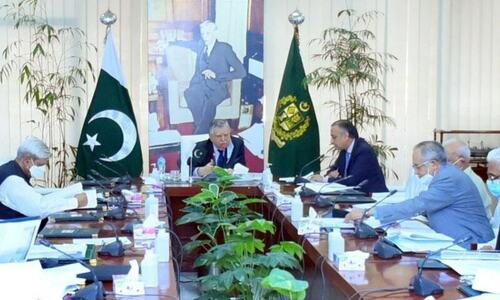
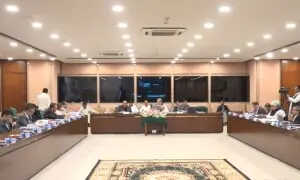
ISLAMABAD: Prime Minister Shehbaz Sharif has cut down the size the coalition government’s Economic Coordination Committee (ECC) of the Cabinet by drastically reducing its strength from 12 to five.
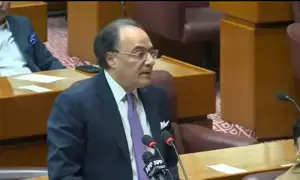
Led by Finance Minister Miftah Ismail of the PML-N, the all-important committee of the cabinet that normally meets on a weekly basis to take day-to-day decisions on economic matters has representation from only two parties – PML-N and PPP – of the coalition that comprises eight parties, excluding independents.
According to a notification issued by the Cabinet Division, the prime minister constituted the ECC in terms of rule 17(2) of the Rules of Business 1973. Besides the finance minister, other members of the committee included Commerce Minister Syed Naveed Qamar and Industries Minister Makhdoom Murtaza Mehmood from the PPP, and National Food Security Minister Riaz Pirzada and Planning Minister Ahsan Iqbal from the PML-N.
The ECC, during the previous PTI government, had 14 members, led by the then finance ministers Asad Umar and Dr Abdul Hafeez Shaikh, but then its strength was reduced to 12 under Shaukat Tarin. The ECC during the last three and a half years was a combination of economic and political representation.
Led by finance minister, members include commerce, industries, national food security, planning ministers
A senior government official remarked that this was perhaps the smartest ECC Pakistan has ever had after the 1973 Constitution, and has been envisaged for focused discussions on matters of technical and economic nature within the ranks of two larger political parties of the coalition. He said the Cabinet Division’s senior officials had advised the new government to constitute a smaller ECC in view of experience with the previous set-up when long debates used to take place, both at the level of ECC and the cabinet.
“It is better to have professional input from professionals in the ECC for making recommendations to the all-inclusive federal cabinet for collective wisdom,” an official explained. The new ECC will also be attended on special invitation by 18 other key functionaries of the government, including 14 federal secretaries of the economic ministries besides deputy chairman of the Planning Commission, governor of the central bank and chairmen of the Board of Investment and Securities and Exchange Commission of Pakistan (SECP).
The Shaukat Tarin-led ECC was reduced from 14 to 12 as the ministries of power and petroleum were merged into the Energy Ministry and the Commerce Ministry remained under the then prime minister Imran Khan. Other members of that ECC included the ministers for communications, economic affairs, energy, industries and production, interior, law and justice, maritime affairs, national food security and research, planning and development, privatisation, railways, and water resources. It used to be attended on special invitation by 21 non-members and officers, including the minister of state for information, special assistant on social protection and poverty alleviation, commerce adviser, deputy chairman of the Planning Commission, the SECP chairman and federal secretaries of the relevant ministries.
The unchanged charter of the ECC includes consideration of all urgent economic matters and coordination of economic policies initiated by various divisions and ministries, and to identify and propose measures for the gradual attainment of the status of a welfare state.
The ECC is also responsible for maintaining vigilance on the monetary and credit situation, and make proposals for the regulation of credit in order to maximise production and exports and to prevent inflation and determine the future pattern of growth of agriculture and industries.
The cabinet committee is also required to review from time to time the country’s import and export policies and their effect on production and investment and measures for promotion of exports, and watch the prevailing price situation with a view to ensuring stability of the prices of goods used by the common man.
The body is also responsible for implementation of any other task assigned by the cabinet from time to time, including cases of agreements and licensing for oil prospecting and exploration, overseeing the performance of important autonomous bodies and cases of industrial sanctions where powers have not been delegated to subordinate authorities. Its role also involves tariff problems and cases involving fiscal anomalies, review of major social and economic surveys such as labour force survey, demographic survey, household income and expenditure surveys, census of large-scale manufacturing industries and small and medium enterprises.
Published in Dawn, May 18th, 2022