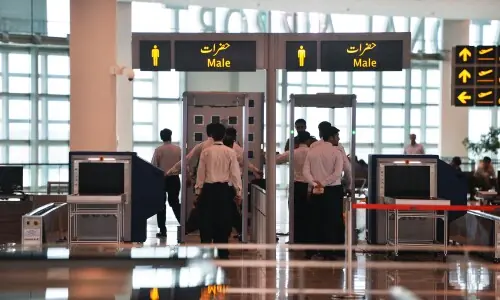
HUNDREDS of thousands of young Pakistanis take the general recruitment (GR) exams conducted by the Federal Public Service Commission (FPSC) each year. The large swarms of candidates at these exams indicate how desperate our youth is for employment opportunities, which are becoming a rare commodity with each passing day.
Although these numbers might not be sufficiently accounted for in the national economic surveys, that in no way alleviates the plight of the youth. Adding to the despair of these job-seekers is the snail-paced recruitment process of the FPSC.
The overall recruitment cycle for the GR exams takes anywhere between 18 and 24 months. After taking the initial screening tests, candidates have to wait for close to 6-8 months to know how they performed. This is despite the fact that the candidates pay an application procession fee to the FPSC.
It turns out that these eternal delays in result announcements are not inevitable. Almost all the tests are based on multiple-choice questions (MCQs) and are thus designed to be assessed through technologies that can scan and evaluate a large number of answer sheets at any time, drastically reducing the lag.
Around 50,000 candidates appeared in the MCQ-based preliminary test for the Central Superior Services (CSS) exams for 2022. The FPSC announced the results in a mere 15 days!
That is great, but it does make one wonder why the same FPSC takes up to eight months to evaluate GR tests and announce the results despite the significantly lower number of candidates. The obvious answer is the bureaucratic red tape — a long-standing feature of our institutions.
This also shows the step-motherly attitude of the FPSC towards GR candidates, as if they don’t pay their fees. This grim situation warrants the attention of the relevant authorities to facilitate the youth who are already on the brink of despair.
Abdul Karim
Sukkur
Published in Dawn, May 6th, 2022