0
0

 Governance, a function of strong institutions, is a pre-requisite for improving economic performance on a sustained basis. While the issue of strengthening institutional framework is frequently highlighted, its outcome is sliding down without any trace of improvement. Countless indications show the eroding of governance even in the routine affairs of economic and financial working.
For example, the government has virtually failed to enforce the ban on wedding meals. Similarly, Trading Corporation of Pakistan (TCP) refused to accept the lowest tender bid for import of urea without assigning any logical reason. Non-transparent parleys are continuing to rescue the deal for sale of PTCL.
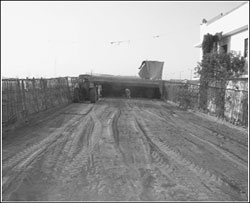
The decision-making process is non-institutional at best. This applies to both social and economic issues. The case of two mega transportation projects in Karachi, namely Karachi Northern Bye Pass and Lyari Expressway can be easily cited. Interestingly, the core objective was to provide direct transportation link of heavy traffic/port related large vehicles to the Super Highway without creating congestion on the inner-city road network. Technical evaluation has revealed that the need of Lyari Expressway did not exist in the presence of the Northern Bye Pass.
The cost of Lyari Expressway has escalated over Rs10 billion. Its utility and relevance is yet to be established. Similarly, under the advice of donor agencies, a mega bulk water supply project of K-4 is envisioned from Indus-Kalri source for Karachi from 2006 onwards. But the city needs revamping of existing water distribution network before adding more water quantities. Such decisions are taken outside the institutional framework.
In the prevailing institutional vacuum and laissez-faire capitalism, the survival of the common man has become completely dependent on informal economy. According to research studies done by the Orangi Charitable Trust (OCT), at least 70 per cent of the workforce in Karachi is employed in the informal sector. This form of economy, whim runs parallel to formal or documented economy, has its existence in all sectors.
Causes of growth and development of the informal economy are many: legacies of undocumented feudal system; over regularization of economic and financial systems, lack of incentives for documentation/formalization and absence of education and awareness. It means a low number of tax payers, high level of exploitation of labour force and spread of cash transactions.
The state apparatus is nowadays functioning in a totally individualistic fashion in contrast to institutionalized working. For instance, the Planning Commission used to prepare the five-year development plans after extensive and thorough analysis and studies. These plans used to act as the main overlay framework for developmental spending. The decisions used to be structured and institutionalized with inputs from departments, committees and legislators.
We now find hurriedly cobbled programmes bearing the personal titles: prime ministers’ packages, Presidents’ programmes or chief ministers’ packages are most common formats through which developmental works are finalized. Monitoring and evaluation of institutions are ineffective. The delivery is poor.
At present, even the relief operations after the October 8 quake are handled without any institutionalised structure. Several concerned groups including political parties have demanded proper record keeping and audit of the relief and rehabilitation works. By diminishing public institutions much damage has been done to vital national interests.
The real investment and state initiative in the development and extension of social and physical infrastructure is declining sharply. Whether roads and streets or health care service, the performance is not up to a desirable standard.
Recent abortive attempts to sell electricity and telecom utilities of the country are examples of mismanagement. Another case in point is the half-hearted attempt towards de-regulation of utilities and inputs. The oil and gas sector has been completely dominated by the large corporate interest groups without adequate representation of public representatives. By allowing petroleum prices to rise up till exponential scales, the cost of doing business has risen. And so have the consumer prices.
A good economic performance cannot be achieved without a sound and potent institutional set-up. It is vital to ensure the independence and efficiency of key institutions such as State Bank of Pakistan, Auditor General of Pakistan, Public Accounts Committee and Planning Commission to promote an objective approach in economic policy-making.